

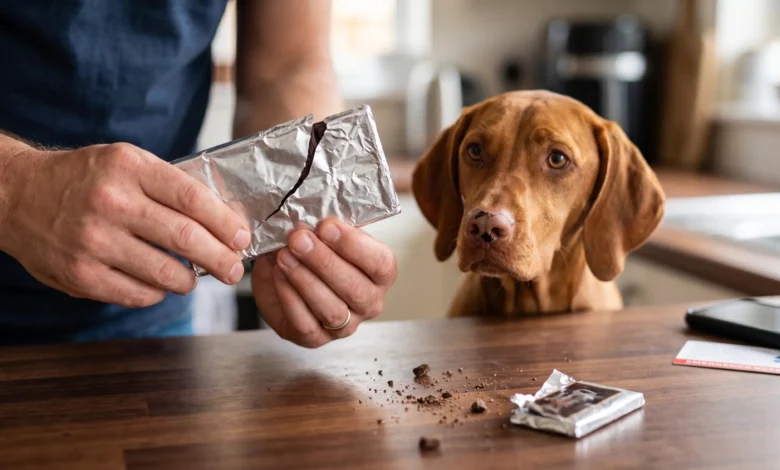
Dog Ate Chocolate? 2026 Emergency Steps & Toxicity Guide
Finding a torn candy wrapper on the floor is a terrifying moment for any dog owner. If your dog just ate chocolate, you need to act fast, but you also need to stay calm.
The danger level depends entirely on two things: how much your dog weighs and exactly what kind of chocolate they consumed.
When a dog eats chocolate, the methylxanthines (theobromine and caffeine) overstimulate their heart and nervous system. Symptoms like vomiting and restlessness usually appear within 6–12 hours. Because dogs metabolize these toxins slowly (17.5-hour half-life), severe symptoms can develop up to 24–72 hours later. Contact a vet immediately if they consumed dark or baker’s chocolate.
Key Takeaways
- Toxicity depends on your dog’s weight compared to the darkness of the chocolate.
- Symptoms of poisoning often do not appear immediately; expect a 6 to 12-hour delay.
- Baker’s chocolate and cocoa powder are the most dangerous types, requiring immediate veterinary intervention.
- White chocolate lacks toxic compounds but carries a severe risk of triggering acute pancreatitis.
- Never attempt to induce vomiting at home without professional guidance.
Immediate Action: The 3-Step Emergency Protocol
Time is your biggest advantage right now. Before you start looking up symptoms or trying to do the math on how much they ate, follow this exact protocol.
- Secure the dog: Move your dog to a safe, confined area away from any remaining chocolate or wrappers.
- Collect the evidence: Find the packaging. The exact percentage of cocoa listed on the label is the most important detail a vet needs to calculate the toxic dose.
- Call for professional help: Dial your local emergency vet or the ASPCA Animal Poison Control Center at (888) 426-4435 immediately. Have your dog’s exact weight ready.
Pro Tip: Take a clear photo of the ingredients list and nutritional panel if your dog chewed up the wrapper. You can easily read it over the phone or show it to the clinic staff.
Common Mistake: Do not attempt to induce vomiting at home using household items like hydrogen peroxide or salt unless a veterinary professional specifically tells you to. Doing this incorrectly can cause severe esophageal burns or life-threatening aspiration pneumonia.
Why is Chocolate Toxic to Dogs? (The Science)
The real danger in chocolate comes from chemical compounds called methylxanthines. Specifically, chocolate contains two of these: theobromine and caffeine.
When humans eat chocolate, our bodies process and flush out these compounds quickly. Dogs cannot.
The Metabolic Gap
Dogs process theobromine incredibly slowly. It has an elimination half-life of roughly 17.5 hours in a dog’s system. This means the toxin stays in their bloodstream, continuously overstimulating their nervous system and heart.
Because of this slow metabolism, a dog might look completely fine for hours after eating a chocolate bar. Owners often assume they are safe, only for severe symptoms to hit half a day later. If you want to understand clinical treatment options, you can review the Merck Veterinary Manual on Chocolate Poisoning Management.
Darkness Equals Danger
The toxicity level directly matches the bitterness and darkness of the chocolate.
As noted by ASPCA Pet Health Insurance, “The darker the chocolate, the more theobromine it will contain making it more dangerous to dogs.”
Baking chocolate and dry cocoa powder are highly concentrated. Even a tiny amount can be lethal to a small dog. Milk chocolate is less concentrated, but a large amount can still cause severe cardiotoxic effects, including abnormal heart rhythms.
The “No-Math” Toxicity Matrix
Veterinarians measure toxicity in milligrams per kilogram (mg/kg). But in an emergency, the last thing you want to do is complex math.
We developed this quick-reference matrix so you can instantly gauge the threat level. Find your dog’s weight, then look at the type of chocolate they ate. The amounts listed in the table represent the “danger zone” where serious clinical signs begin.
| Dog Weight (lbs) | Milk Chocolate (Danger Zone) | Dark Chocolate (Danger Zone) | Baker’s Chocolate (Danger Zone) |
| 10 lbs | 3+ oz | 0.5 oz | Any amount |
| 30 lbs | 9+ oz | 1.5 oz | 0.5 oz |
| 50 lbs | 15+ oz | 2.5 oz | 1.0 oz |
| 70 lbs | 20+ oz | 3.5 oz | 1.5 oz |
Keep in mind that severe or fatal reactions can happen at lower amounts depending on your dog’s age, baseline health, and sensitivity to stimulants.
The 72-Hour Symptom Timeline
Because dogs process theobromine so slowly, the effects of chocolate poisoning roll out in phases.
- 0–2 Hours: The ingestion window. The dog typically shows no symptoms and behaves normally while the stomach breaks down the chocolate.
- 6–12 Hours: Early signs begin. You will likely notice behavioral changes first, including restlessness, pacing, panting, and hyperactivity. Physical symptoms like vomiting, diarrhea, and excessive thirst also start here.
- 12–24 Hours: Peak toxic effects. As the methylxanthines fully absorb into the bloodstream, the dog may experience a dangerously rapid heart rate and abnormal heart rhythms.
- 24–72 Hours: If untreated, severe neurological symptoms appear. This includes muscle tremors, seizures, and potential cardiac failure. Depending on the dose, clinical effects can take up to four days to fully resolve.
Mini Case Study: The Delayed Reaction
A 30-pound Beagle consumes an 8-ounce block of semi-sweet baking chocolate left on a kitchen counter. The owner assumes the dog is fine because no symptoms appear immediately. Eight hours later, the dog begins pacing rapidly, panting heavily, and vomiting. Because of the dog’s slow metabolism, the toxin has fully absorbed by the time the owner seeks help, requiring a multi-day stay at the clinic on IV fluids and anti-arrhythmia medication.
Mid-Article Summary
- Math is secondary: If your dog ate baker’s or dark chocolate, assume it is an emergency regardless of weight.
- Don’t trust early calm: The 17.5-hour half-life of theobromine means your dog will look fine for hours before symptoms hit.
- Watch for pacing: Restlessness and panting are often the first signs of toxicity taking hold.
The White Chocolate & Pancreatitis Warning
White chocolate contains negligible amounts of theobromine. If your dog eats it, they are unlikely to suffer from methylxanthine poisoning. However, this does not mean white chocolate is safe.
White chocolate is packed with cocoa butter, fat, and sugar. This massive influx of fat can trigger secondary acute pancreatitis in dogs. Pancreatitis is a painful, internal inflammation that requires immediate veterinary care, IV fluids, and pain management.
Mini Case Study: The White Chocolate Pancreatitis Trap
A 15-pound Pug eats an entire bag of white chocolate chips. The owner checks a toxicity calculator and, seeing the theobromine risk is zero, skips calling the vet. Two days later, the dog presents with severe abdominal pain, lethargy, and bloody diarrhea. The dog isn’t poisoned; they are suffering from acute pancreatitis triggered by the fat content.
What the Vet Will Do (Clinical Treatment)
If you get your dog to the clinic quickly, the vet will likely induce vomiting to remove the chocolate before it digests. They may also administer activated charcoal, which binds to the remaining toxins in the stomach and prevents them from entering the bloodstream.
If the dog is already showing symptoms, treatment shifts to life support and symptom management. The vet will use intravenous (IV) fluids to help flush the kidneys and speed up the removal of theobromine. They will also provide specific medications to control seizures, slow down a racing heart, and correct abnormal arrhythmias.
For highly technical guidelines on clinical management, veterinary professionals often refer to the Merck Veterinary Manual on Chocolate Poisoning Management.
Summary & Next Steps
Chocolate toxicity is a serious veterinary emergency driven by theobromine and caffeine. The severity depends on the darkness of the chocolate and the size of your dog. Because symptoms are delayed by 6 to 12 hours, waiting to see if your dog gets sick is a dangerous strategy.
If you suspect your dog ate chocolate, take these three steps:
- Remove the hazard: Ensure your dog cannot eat any more chocolate.
- Save the wrapper: Keep the packaging so the vet knows the exact cocoa percentage.
- Call for help: Contact the ASPCA Animal Poison Control Center at (888) 426-4435 or head to your nearest emergency vet immediately.
FAQs
How much chocolate will kill a dog?
The estimated lethal dose of theobromine is between 100 and 200 mg/kg. However, severe and potentially fatal reactions can occur at much lower doses, especially with dark or baker’s chocolate.
What if my dog ate a chocolate chip cookie?
A single standard chocolate chip cookie contains a very small amount of semi-sweet chocolate. For a medium or large dog, this usually causes mild stomach upset rather than severe poisoning, but you should still monitor them closely and consult a vet.
Can 1 M&M kill a dog?
No. A single milk chocolate M&M contains a microscopic amount of theobromine. It will not harm a dog, even a small breed.
Can I give my dog milk if they ate chocolate?
No. Milk does not neutralize theobromine. Giving your dog milk can actually cause more stomach upset and diarrhea, complicating their symptoms.
How long does it take for a dog to show signs of chocolate poisoning?
Symptoms usually develop within 6 to 12 hours after ingestion. They rarely appear immediately.
Is white chocolate toxic?
White chocolate does not contain enough theobromine to cause poisoning. However, its high fat and sugar content can trigger acute, life-threatening pancreatitis days after ingestion.
How do I induce vomiting in a dog safely?
You should never induce vomiting at home using hydrogen peroxide, salt, or other home remedies unless explicitly instructed by a veterinary toxicologist. Doing so incorrectly can cause severe internal burns or pneumonia.
What is the ASPCA Poison Control number?
The ASPCA Animal Poison Control Center can be reached at (888) 426-4435. A consultation fee may apply.
References
- Merck Veterinary Manual — 2026
- VCA Hospitals — 2026
- ASPCApro — 2026
- GoodRx — 2026
- Veteris — 2026