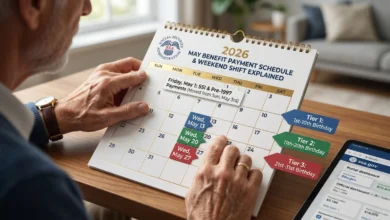


Early 2027 Social Security COLA projections range between 3.6% and 3.8%, potentially boosting average monthly retired worker benefits by roughly $79 to $2,163. The Social Security Administration officially calculates the exact COLA rate in October 2026 using third-quarter CPI-W inflation figures compiled by federal agencies.
Key Takeaways
- Forecasted Rate: Non-partisan advocacy estimates from The Senior Citizens League project a 2027 Cost-of-Living Adjustment between 3.6% and 3.8%.
- Monthly Increase: A 3.8% bump would increase the average monthly retirement benefit from $2,084.40 to approximately $2,163 per month starting in January 2027.
- Official Announcement: The Social Security Administration will announce the final 2027 COLA percentage in mid-October 2026 following the release of September inflation data.
- Medicare Deductions: Rising Medicare Part B premiums will likely absorb a portion of the gross monthly raise for millions of enrolled beneficiaries.
Early Estimates Suggest a Noticeable Bump for 2027 Checks
Inflation continues to erode the purchasing power of fixed-income seniors across the nation. Essential household costs like healthcare, housing, and food consume a growing share of monthly income, leaving many retirees concerned about keeping pace with rising expenses. Early projections for the 2027 Social Security Cost-of-Living Adjustment offer a clear preview of potential benefit increases arriving next year.
Preliminary figures from senior advocacy organizations indicate that beneficiaries could receive a larger adjustment than they did in recent payment cycles. Policy analysts at The Senior Citizens League project a 2027 COLA ranging from 3.7% to 3.8%. Independent research from AARP similarly points toward a 3.6% increase based on persistent price pressure in key consumer sectors.
If the adjustment settles near 3.8%, the average monthly check for a retired worker will expand significantly. The average benefit of $2,084.40 recorded in mid-2026 would rise by roughly $79 per month, bringing total monthly checks to approximately $2,163 starting in January 2027. Average spousal benefits would also climb from $986 to over $1,023 per month, passing the four-figure mark for the first time.
How the Social Security Administration Computes Annual Increases
The federal government uses a specific, statutory formula to determine whether Social Security recipients get a raise. Federal law mandates that the Social Security Administration base annual COLAs on changes in the Consumer Price Index for Urban Wage Earners and Clerical Workers (CPI-W). The Bureau of Labor Statistics measures this specific index monthly to monitor price movements across consumer goods and services.
To calculate the 2027 adjustment, analysts evaluate the average CPI-W reading during the third quarter of 2026, which covers July, August, and September. Officials compare that third-quarter average to the average CPI-W recorded during the third quarter of 2025. The percentage difference between those two averages determines the final COLA percentage, rounded to the nearest one-tenth of one percent.
The government does not establish the final COLA rate until all third-quarter inflation figures are finalized. The official announcement occurs in mid-October 2026 immediately after the Bureau of Labor Statistics publishes September CPI numbers. Beneficiaries receive personal mailed notices and online updates detailing their adjusted payment schedules during December 2026.
Comparing Recent Social Security Adjustments
Understanding historical trends provides helpful context for evaluating the projected 2027 figures. Annual COLA percentages fluctuate alongside wider macroeconomic conditions and consumer price movements.
| Benefit Year | COLA Percentage | Average Monthly Retirement Increase | Key Inflation Drivers |
| 2023 | 8.7% | $146.00 | Rapid post-pandemic inflation and high energy costs |
| 2024 | 3.2% | $59.00 | Moderating goods prices and cooling supply chains |
| 2025 | 2.5% | $49.00 | Normalizing inflation across consumer retail items |
| 2026 | 2.8% | $56.00 | Persistent housing and medical service price pressures |
| 2027 (Projected) | 3.6% – 3.8% | ~$75.00 – $79.00 | Energy market volatility and elevated shelter costs |
The table illustrates how inflation trends directly influence annual benefit adjustments over time. While the projected 2027 increase remains below the historic 8.7% bump seen in 2023, it stands well above the 20-year historical COLA average of roughly 2.6%.
Primary Economic Drivers Influencing the 2027 Adjustment
Energy prices and fuel market fluctuations serve as significant catalysts for COLA revisions during 2026. Shifts in global oil markets directly affect retail gasoline and residential utility rates across American households. Higher transportation costs quickly spill over into agricultural processing and retail grocery prices, creating broader inflation momentum.
Shelter costs and property insurance rates also remain persistent factors maintaining elevated inflation data. Housing expenditures make up a major component of overall CPI calculations, directly influencing both general consumer indices and specialized wage indices. Because rent and homeownership costs adjust slowly, their upward pressure carries forward into quarterly benchmark averages.
“A higher COLA reflects persistent price pressures that seniors experience every day at the grocery store and pharmacy. While a bigger check helps, elevated inflation continues to compress retirement budgets across the country.”
— Mary Johnson, Independent Social Security & Medicare Analyst
As noted by industry experts, higher benefit checks arrive as a direct response to rising living expenditures. While a 3.8% raise brings welcomed financial relief, it highlights the ongoing challenges fixed-income households encounter when managing basic expenses.
CPI-W Versus CPI-E: The Ongoing Senior Spending Debate
A major point of discussion among retirement advocates centers on the index used to calculate annual COLAs. The current formula relies on the CPI-W, an index that tracks spending habits for younger working households. Critics point out that urban workers spend a higher percentage of their income on apparel, education, and transportation than typical retirees do.
In contrast, older Americans allocate a significantly higher percentage of their monthly budgets toward medical care and housing. The Bureau of Labor Statistics tracks an experimental index called the CPI-E, which specifically measures spending among households headed by individuals aged 62 and older. Historical analysis demonstrates that the CPI-E generally increases faster than the CPI-W due to rising healthcare overhead.
Legislators continue to evaluate proposals that would switch the Social Security COLA formula from the CPI-W to the CPI-E. Adopting the senior-focused index would likely result in slightly higher annual benefit increases over extended periods. Until Congress passes legislation altering the underlying statutes, the Social Security Administration must continue using the established CPI-W metric.
How Medicare Part B Increases Impact Net Social Security Checks
A gross increase in Social Security benefits does not automatically translate into an equal increase in take-home pay. Most Social Security beneficiaries have their Medicare Part B monthly premiums deducted directly from their benefit checks. When Medicare Part B premiums rise alongside general healthcare costs, that increase reduces the net gain from the annual COLA.
Medicare Part B premium rates for 2027 will be finalized by the Centers for Medicare & Medicaid Services in late autumn 2026. In years when medical costs rise rapidly, Medicare Part B premium hikes can consume a substantial portion of a retiree’s monthly Social Security raise. Beneficiaries must review their total deduction breakdown to determine their true net payment increase.
Federal statutory protections do include a provision known as the “hold harmless” rule to protect retirees from declining checks. This rule prevents Social Security checks from decreasing year-over-year due solely to an increase in Medicare Part B premiums. However, the protection applies primarily to beneficiaries whose benefit raise is smaller than the incoming Part B premium increase.
Practical Steps to Prepare Your Retirement Budget
Retirees can take proactive financial measures before the official 2027 COLA takes effect in January. Reviewing monthly income statements and identifying fixed household expenses helps establish a baseline budget for the upcoming year. Tracking personal expenditures against expected check adjustments ensures better cash flow management.
- Set Up an Online Social Security Account: Creating a personal profile on the official Social Security Administration portal allows you to access your official COLA notice digitally in December without waiting for postal delivery.
- Review Tax Withholding Preferences: An increase in total monthly income could alter your overall tax liabilities or push a portion of your benefits into a taxable bracket. Adjusting your federal tax withholding settings prevents unexpected tax obligations when filing annual returns.
- Audit Monthly Health Insurance Expenses: Review incoming Medicare Part B deduction notices and Medicare Advantage plan updates during open enrollment to understand your net health coverage costs.
Planning ahead for incoming benefit changes ensures smoother financial transitions when updated checks arrive. Staying informed about official announcements allows households to optimize their income strategies effectively.
Editorial Methodology
This report was developed through thorough analysis of official economic updates published by the Social Security Administration, the Bureau of Labor Statistics, and independent non-partisan senior advocacy organizations. All data points, historical figures, and forward-looking projections were cross-verified against official public records to ensure financial accuracy and transparency.