
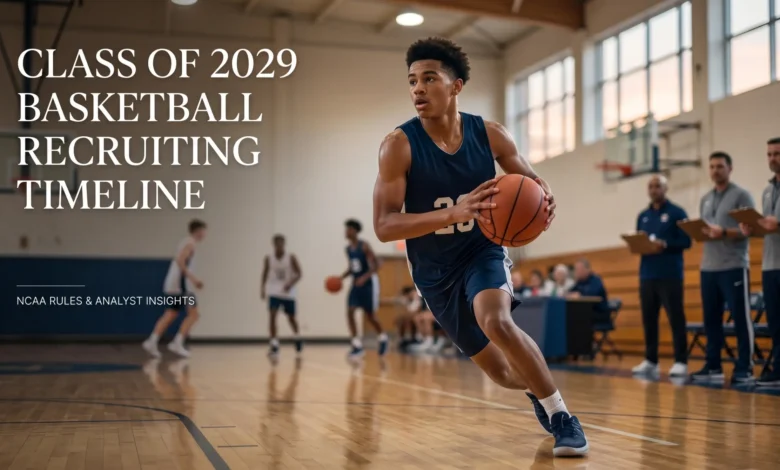
Class of 2029 Basketball Rankings: When Do They Drop?
If you search for the official 247Sports or ESPN ranking lists for the top high school basketball players graduating in 2029, you will find empty databases. Independent blogs often fill this gap by handing out unverified ratings. This leaves parents, coaches, and fans confused about who is actually tracking these players.
While grassroots watchlists offer early glimpses of talent, official national recruiting rankings do not exist for the Class of 2029. Major scouting networks delay these lists due to structural evaluation timelines and strict NCAA compliance guidelines.
Featured Snippet Direct Answer
Official Class of 2029 basketball rankings from major networks like ESPN, 247Sports, Rivals, and On3 do not exist yet. These outlets typically delay national composite rankings until players complete their freshman year. Current player tracking relies strictly on unofficial grassroots watchlists from independent scouting services, as official NCAA star ratings are not assigned this early.
Key Takeaways
- Official Class of 2029 composite rankings from major networks are currently empty.
- Players in this recruiting class are currently completing their freshman year of high school.
- Early lists published on regional blogs are unverified, unofficial grassroots watchlists.
- NCAA Division I coaches face strict communication restrictions and cannot contact freshmen directly.
- Early college scholarship offers are non-binding verbal gestures that cannot be formalized yet.
Quick Answer
If you want to know where the Class of 2029 stands today, look at grassroots event rosters rather than national databases. Major networks will not publish their first official lists until these athletes enter their sophomore year. For now, any “5-star” label you see online is entirely unofficial.
The Freshman Ranking Vacuum: Why Major Databases Are Empty
If you visit the 247Sports Recruiting Database, the selection for the 2029 class shows zero results. This is a deliberate choice by national analysts, not an oversight.
The Evaluation Delay
National talent evaluators avoid ranking players this early because adolescent development is highly unpredictable. Major networks generally look for specific milestones before publishing a freshman list:
- Tracking physical growth and wingspan changes during the initial high school transition.
- Evaluating production against older, varsity-level competition rather than age-matched peers.
- Benchmarking skills at national, invite-only camps where top prospects face each other.
A player who dominates in middle school often relies purely on an early growth spurt. Analysts wait for the playing field to level out during high school before assigning national ranks.
Growth Plates and Early Hype
Rankings fluctuate heavily once high school basketball begins. Players grow, skills sharpen, and the athletic gap shrinks.
Common Mistake: Assuming an early middle-school ranking guarantees long-term college recruiting success. Physical growth plateaus often change the evaluation order completely.
Consider a dominant eighth-grade AAU standout who tops early internet watchlists. If his physical growth levels off during his freshman year, late-blooming peers quickly catch up. By the time official sophomore rankings debut, he may drop out of the top national tiers entirely.
Official National Networks vs. Grassroots Watchlists
Because major media outlets leave a temporary vacuum, independent scouting services step in to track early talent. It is essential to distinguish between these two layers of sports media coverage.
Early Names on the Circuit
Several high school freshmen are already generating significant buzz on summer circuits. For instance, J.J. Crawford is heavily featured in early scouting coverage due to his high-level perimeter scoring. King Bacot is consistently listed as a top prospect on grassroots lists, while Flory Kuminga stands out for his physical tools. Cayden Gaskins is another freshman noted for his early size and perimeter skills.
Decoding the Evaluation Matrix
These names appear on watchlists managed by grassroots organizations like Prep Hoops Next and Made Hoops. However, these lists are entirely unverified by NCAA-recognized scouting syndicates. They fluctuate based on weekend tournament performances rather than long-term college potential.
| Feature / Metric | Official Recruiting Networks (ESPN, 247Sports, On3) | Grassroots Scouting Services (Prep Hoops Next, Made Hoops) |
| Current 2029 Availability | Verified data not available – cannot assume | Active early watchlists available |
| Star Ratings (5-Star / 4-Star) | Deferred until sophomore/junior seasons | Unofficial or omitted entirely |
| NCAA Compliance Standing | Universally recognized benchmarking tools | Unverified independent talent tracking lists |
| Primary Evaluation Focus | Varsity high school performance & elite circuits | Middle school achievements & early AAU tournaments |
The Road to Signing Day: Class of 2029 Evaluation Timeline
A high school prospect transitions from a freshman watchlist to a signed collegiate athlete over a strictly regulated four-year period. Understanding this timeline explains why official rankings are not available today.
Procedural Checklist: The Four-Year Cycle
- Freshman Season (2025-2026): Athletes play their first varsity high school basketball season and transition to older AAU circuits. During this window, tracking is limited to unofficial grassroots watchlists.
- Sophomore Season Debut: Major networks release their initial top 50 or top 100 national rankings. This is when official 5-star and 4-star ratings are formally introduced.
- The June 15 Milestone: Following the conclusion of their sophomore year, Division I college coaches are legally permitted to initiate direct, private communication with recruits.
- Junior Summer Circuit: Prospects enter the high-stakes evaluation period on major sneaker circuits (like EYBL, 3SSB, or UAA). Here, composite rankings begin to solidify as players compete head-to-head.
- National Signing Period (November 2028): Class of 2029 athletes sign their binding National Letters of Intent, finalizing their college commitments.
Mid-article Summary Box
- Recruiting Reality Check: Do not panic if a talented freshman is unranked on major websites today. The industry standard is to wait until a player establishes a varsity high school baseline before attaching a permanent national ranking or star tier.
Understanding NCAA Rules for High School Freshmen
College recruiting is heavily regulated to protect young athletes. The NCAA enforces a firm communication wall that dictates how and when college programs can interact with high school freshmen.
The Communication Wall
NCAA Division I men’s basketball coaches face strict communication restrictions with Class of 2029 recruits during their freshman year. A college coach cannot simply text or call a 14-year-old athlete.
Pro Tip: Understand that Division I coaches cannot directly contact Class of 2029 prospects until June 15 following their sophomore year. Right now, any communication between a college program and a freshman prospect must happen indirectly, usually routed through a high school varsity or AAU coach.
The Reality Behind “Early Offers”
You might see social media posts claiming a high school freshman just received a Division I scholarship offer. While exciting, it is important to understand what these offers actually mean under NCAA rules.
Early scholarship offers extended to Class of 2029 athletes are non-binding verbal offers. They cannot be legally formalized until the player’s senior year.
- Typical Scenario Example: A 6’1″ freshman point guard receives a “verbal offer” from a major Division I program after playing well at a summer camp. Because the player cannot officially sign a National Letter of Intent until November 2028, the offer is strictly a preliminary show of interest. It is entirely non-binding. If the college coaching staff gets fired, or the player fails to meet NCAA Eligibility Center academic requirements, that early offer evaporates immediately.
For complete rules on eligibility and contact limits, parents and athletes should review the NCAA College Basketball Recruiting Guide.
Practical Tool: The Fan and Parent Evaluation Guide
Navigating early recruiting media requires a sharp eye. Use these checklists to separate official scouting data from internet hype.
Source Verification Checklist Before trusting a “5-star” graphic on social media, ask these three questions:
- Is the platform an official national database partner (ESPN, 247Sports, Rivals, On3)?
- Does the site have clear editorial accountability, or is it an anonymous social media aggregator?
- Is the “star rating” backed by a composite scout score, or is it just a local blog assigning a label?
Mistake/Risk Checklist
- Paying for premium placements: Never pay an unverified scouting forum for premium ranking placement expecting it to influence college coaches.
- Over-indexing middle school highlights: Remember that middle school dominance does not automatically translate to high school varsity success.
- Mistaking interest for a contract: Treat all early verbal Division I offers as “high interest” rather than guaranteed scholarships.
Summary & Next Steps
Official Class of 2029 rankings do not exist right now because major platforms prioritize varsity baselines over early adolescent performance. True recruiting cycles and national composite rankings will not activate until these players finish their sophomore year.
Next Steps for Readers:
- Monitor upcoming grassroots summer circuits to see which early names consistently perform well on watchlists.
- Focus on varsity development and actual high school game film rather than chasing arbitrary early star counts.
- Bookmark this tracker for updates when the official 247Sports and ESPN sophomore rankings finally debut.
FAQs
When will ESPN release its official Class of 2029 rankings?
ESPN and other major networks typically wait until high school players complete their freshman season. You can expect the first official composite lists to debut around a player’s sophomore year.
Does 247Sports have a list of top 2029 basketball recruits?
No. If you check the 247Sports database for the 2029 cycle, it currently shows zero results. The network does not rank freshmen this early in their development.
What does it mean if a freshman has a 5-star rating on a blog?
It means an independent or grassroots scout thinks highly of the player. However, it is an unofficial rating. Major NCAA-recognized networks do not assign official 5-star statuses to high school freshmen.
Can college coaches call high school freshmen directly?
No. NCAA Division I coaches are strictly prohibited from initiating direct contact with Class of 2029 prospects until June 15 following the completion of their sophomore year in high school.
Are early scholarship offers for the Class of 2029 real?
They are real expressions of strong interest, but they are technically non-binding verbal offers. A player cannot sign a legally binding athletic scholarship until their senior year.
Where can I see a reliable watchlist for the Class of 2029?
While unverified by major networks, respected grassroots scouting organizations like Prep Hoops Next and Made Hoops track early middle school and freshman standouts on regional watchlists.
When do Class of 2029 players sign their letters of intent?
The official national signing period for the Class of 2029 will not open until November 2028, during the fall of their high school senior year.
References
- NCAA.org, 2026
- 247Sports, 2026
- National Federation of State High School Associations (NFHS), 2026
- Prep Hoops Next, 2026