

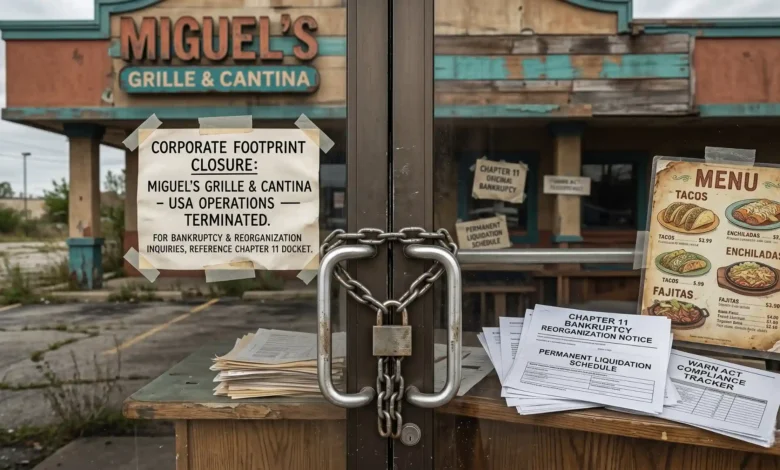
Mexican Restaurant Chain Exits US Market: 2026 Corporate Restructuring Tracker
The United States food service industry contributes roughly $684 billion to the domestic economy, representing 2.5% of the nation’s gross domestic product. While the National Restaurant Association projected overall sector sales to pass $1.1 trillion by the end of 2024, this massive headline figure hides deep structural strain beneath the surface. For multi-location dining brands, keeping the lights on has become an increasingly volatile battle against compressed operational margins.
Surviving corporate restaurant firms are exhibiting much higher economic fragility to inflation and macroeconomic policy shifts than they did before the pandemic. When sudden downward shifts in consumer demand occur, cash flow lines collapse quickly, leaving overextended corporate networks exposed to sudden insolvency. This vulnerability is driving a visible wave of footprint contractions, asset sell-offs, and full cross-border market pullouts across the Mexican casual dining and fast-casual sectors.
A major Mexican restaurant chain exits US operations when compressed profit margins, rising commodity labor rates, and soft consumer discretionary spend render its footprint unsustainable. Recent actions range from full corporate market exits—such as Guzman y Gomez closing its entire US division—to strategic Chapter 11 filings by mainstays like Abuelo’s and On The Border to shed underperforming leases.
Key Takeaways
- Total Market Pullouts: International brands like Guzman y Gomez are entirely closing down their American footprints to eliminate persistent drags on global balance sheets.
- Controlled Restructuring: Chains like Abuelo’s and Tijuana Flats utilize Chapter 11 bankruptcy to shed underperforming real estate liabilities while keeping high-performing units open.
- Strategic Acquisitions: Corporate distress is paving the way for targeted asset buyouts, such as Pappas Restaurants taking over On The Border to execute core menu overhauls.
- Unit Margin Squeeze: Squeezed between higher agricultural import costs and labor expenses, fast-casual operations are highly vulnerable to small shifts in customer dining frequency.
- Real Estate Fallout: Long-term, inflexible retail mall leases are being rejected in federal courts as brands shrink back to their high-density regional strongholds.
Quick Start: The 2026 Corporate Action Status
When evaluating headlines regarding a restaurant chain exit, look directly at the underlying legal filing status. Many readers mistake an asset reorganization for a permanent liquidation. The quick matrix below shows the distinct strategies deployed by major casual and fast-casual brands over the last 24 months.
- Guzman y Gomez (May 2026): Full Corporate Exit. Permanently closed all 8 expansion units in the Chicago hub to refocus capital on profitable Asia-Pacific networks.
- On The Border (May 2026 Acquisition Focus): Restructured & Acquired. Closed over 40 underperforming units during bankruptcy proceedings before a full portfolio buyout by Pappas Restaurants.
- Abuelo’s International (September 2025): Active Chapter 11 Restructuring. Contracted physical footprint from 40 locations down to 16 units across seven states to preserve cash flow.
- Tijuana Flats (April 2024): Restructured & Exited. Closed 11 regional sites under Chapter 11 bankruptcy protection, shifting full ownership to a new corporate asset group.
Confirmed vs. Restructuring: Categorizing Recent Market Shifts
Understanding the trajectory of the modern food industry requires separating corporate stabilization strategies from definitive brand liquidations. When a brand alters its operational footprint, it generally chooses one of two distinct structural paths: a complete geographical market termination or a court-supervised debt reorganization.
Complete Market Pullouts vs. Strategic Reorganizations
A complete market pullout occurs when an executive board decides to halt all domestic operations and absorb the associated write-down costs. This was seen on May 21, 2026, when international fast-casual brand Guzman y Gomez ceased trading at all eight of its Chicago-area locations. Despite investing at least $115 million into its six-year US expansion hub, the brand chose to execute an immediate market pullout. This targeted exit allowed the parent entity to halt escalating domestic cash losses and protect its highly profitable home networks in the Asia-Pacific region.
Conversely, a strategic reorganization under Chapter 11 bankruptcy protection allows a struggling chain to remain operational. This legal framework is typically triggered when a multi-location firm faces severe financial distress paired with managerial deadlocks. Instead of shutting down entirely, the brand uses the court process to freeze debts, negotiate with creditors, and reject expensive, underperforming retail real estate leases.
The table below breaks down the exact contraction rates and current corporate survival strategies of major US Mexican dining networks.
| Restaurant Chain | Filing / Exit Date | Peak US Unit Footprint | Active US Unit Footprint | Current Corporate Operational Strategy |
| Guzman y Gomez | May 21, 2026 | 8 Units (Chicago Hub) | 0 Units (Full Exit) | Total US market pullout; focusing corporate capital on APAC network growth. |
| On The Border | March 2025 Filing | 120 Locations | 80 Units Operational | Portfolio contraction down to 60 corporate and 20 franchised sites; acquired by Pappas Restaurants. |
| Abuelo’s | September 2, 2025 | 40 Locations | 16 Units Operational | Footprint rationalization under Chapter 11; consolidation around core Texas market units. |
| Tijuana Flats | April 2024 Filing | Multi-State Network | Active (11 Units Closed) | Operational under a newly structured asset ownership group; exited bankruptcy process. |
Common Mistake: Assuming a Chapter 11 bankruptcy notice means your local restaurant is closing immediately. In most corporate restructuring scenarios, the brand uses the legal shield to protect its highest-performing regional store cores while quietly walking away from toxic mall leases.
To track live bankruptcy dockets, restructuring timelines, and specific lease rejection schedules across the retail sector, you can monitor primary court filings through the federal registry.
[PacerMonitor Corporate Bankruptcy Filings]
Anatomy of the Margin Collapse: Why Mexican Concepts Are Vulnerable
The fast-casual dining model relies on a delicate economic balance. Operators must source high-quality, fresh ingredients while utilizing a swift, assembly-line assembly model to maximize customer throughput capacity. When macroeconomic shocks hit the hospitality sector, this specific operational framework faces severe structural exposure.
The Unit Economics Trap
Fast-casual chains operate with higher average check sizes than traditional fast-food establishments. While this can yield higher initial revenues, it renders the concept highly sensitive to consumer budget pullbacks during persistent inflationary cycles. If inflation causes a contraction in consumer discretionary spending, multi-location food service businesses face an immediate existential threat.
Because consumers view premium fast-casual options as non-essential expenses, they easily swap them for cheaper traditional fast food or home cooking. When guest traffic drops even slightly, fixed overhead costs like real estate leases and corporate training budgets remain completely unchanged. As a result, chain restaurant managers are forced to prioritize highly rigid revenue management practices, focusing heavily on menu pricing optimizations and strict cost controls to stave off corporate insolvency.
Commodity and Trade Friction
Mexican restaurant concepts carry an additional layer of supply chain asset risk compared to general American dining lines. Their core menu items rely heavily on specific, narrow agricultural pipelines for products like avocados, tomatoes, and specialized spices.
Changes in macro trade frameworks, including agricultural tariff adjustments on goods moving between Mexico and the United States, disrupt these supply chains instantly. In 2026, these agricultural trade shifts have driven sharp spikes in fast-food sourcing costs. Because restaurant chains have already pushed menu prices up significantly over the last several years, they cannot easily pass these new ingredient spikes onto the consumer without driving a massive collapse in store traffic.
As National Restaurant Association representatives have noted, post-pandemic operational cost pressures—including combined food and labor spikes—have climbed up to 35%, leaving virtually no margin for error. When these supply shocks hit, underperforming test sites located far from a chain’s primary regional distribution hub become entirely unsustainable, forcing corporate leadership to execute rapid regional store closures.
Summary of Corporate Shifts at a Glance
- Operational Margins: Typical fast-casual profit margins sit at a narrow 5% baseline, leaving zero buffer for error.
- Cost Surge: Combined food and labor expenditures have climbed 35% across the sector since the pandemic era.
- Geographic Focus: Multi-unit brands are increasingly retreating from speculative expansion hubs to preserve their highest-density regional core areas.
The Human Component: Mass Layoffs and the WARN Act
When corporate hospitality groups execute a rapid market exit or store closure, the fallout goes far beyond corporate balance sheets. Frontline restaurant staff frequently bear the immediate brunt of these sudden executive decisions. This dynamic has brought increased focus onto state and federal employment laws, specifically the Worker Adjustment and Retraining Notification (WARN) Act.
The federal WARN Act protects workers by requiring employers with 100 or more full-time staff to provide a 60-day written notice before staging a mass layoff or location closing. A mass layoff occurs under the law when an employer terminates at least 50 full-time workers at a single operational site. When restaurant chains skip this notice window to stem cash losses, they face immediate legal liabilities and expensive civil class actions.
Sudden Closures and Employee Litigation Risks
The operational risk of failing to manage these notice thresholds became highly visible in May 2026. Following the sudden complete closure of its US division, a group of former employees filed a federal class-action lawsuit against Guzman y Gomez in an Illinois court. The lawsuit alleges that the brand terminated its workforce late in the evening via an internal communication app with zero prior notice.
Legal filings estimate that up to 500 workers across the region were affected by the immediate termination. This move exposes the parent group to significant statutory damage claims despite their market exit. To understand how different corporate teams navigate these legal and operational waters, consider the following structural scenarios.
Mini Case Studies in Corporate Contraction
Case Study 1: The Sudden Structural Windup (Guzman y Gomez)
An international brand attempts to penetrate the highly saturated US fast-casual market to rival dominant incumbents. Despite investing at least $115 million into its multi-unit Chicago expansion hub over six years, localized sales fail to hit long-term profitability metrics. Recognizing a persistent drag on the global balance sheet, management orders an immediate pullout on May 21, 2026. The company opts to absorb a one-time exit charge of $30 million to $40 million, accepting immediate employee litigation risks in Illinois to protect its highly profitable home networks in the Asia-Pacific region.
Case Study 2: The Staged Footprint Consolidation (Abuelo’s International)
A long-standing regional casual dining chain confronts a post-pandemic shift in consumer dining frequency. Maintaining vast, high-overhead physical restaurant spaces becomes unsustainable when systemwide sales drop by 15% due to rising food prices and labor inefficiencies. Utilizing Chapter 11 bankruptcy protection in September 2025, the brand severs toxic lease obligations. Management systematically closes over half of its underperforming footprint, contracting from 40 locations down to 16 units to consolidate around its highest-density core market in Texas.
Pro Tip: Monitor Local Court Dockets for Early Indicators Retail real estate professionals and labor analysts should track active worker class-action filings and formal WARN notices filed with state departments of labor. These public notices serve as reliable leading indicators of corporate financial distress well before a parent firm announces an official bankruptcy petition or final store liquidation.
To review official compliance criteria and employee notification rules during corporate downsizings, check the statutory standards provided by national regulators. [External Link: US Department of Labor WARN Act Guide]
Strategic Tooling: The Restaurant Operational Distress Risk Checklist
Preventing corporate insolvency requires chain operators to constantly evaluate unit performance metrics against macro economic shifts. When multiple risk markers align, corporate managers must pivot toward footprint rationalization rather than pursuing blind geographical expansion. The diagnostic tool below highlights the primary operational metrics used to evaluate brand stability.
The Restaurant Operational Distress Risk Checklist
- [ ] System Sales Decline: Systemwide corporate revenues decline by more than 10% within a rolling 12-month window.
- [ ] Geographic Overextension: Physical footprints expand faster than regional supply chains can efficiently distribute key ingredients.
- [ ] Footprint Concentration Shift: High-overhead, full-service dining spaces fail to match the revenue density of leaner, digital-only builds.
- [ ] Wage-to-Revenue Disproportion: Mandatory state-level minimum wage bumps outpace menu price adjustments, squeezing unit economics.
- [ ] Lease Inelasticity: Long-term retail real estate lease lines lack variable rate clauses to adjust for fluctuating consumer traffic levels.
- [ ] Litigation Drag: Active civil proceedings, contract blockages, or labor compliance violations consume excess executive capital.
End Summary & Next Steps
The visible wave of Mexican restaurant chain closures across the United States marks a clear shift in how corporate hospitality networks view growth. The era of pursuing aggressive, unbridled geographic footprint expansion has given way to strict portfolio optimization. Brands are learning that survival requires maintaining tight control over unit economics, avoiding inflexible real estate commitments, and respecting worker notice mandates to prevent crippling litigation costs.
What to Do Next
- Verify Operational Statuses Directly: Check store statuses directly via corporate digital portals rather than relying on outdated third-party online mapping tools.
- Track Regional Commercial Vacancies: Monitor localized commercial real estate lease rejections to identify broader retail strip or mall vulnerabilities early.
- Audit Bankruptcy Confirmation Calendars: Track federal court dockets to see which distressed brands successfully exit Chapter 11 under restructured asset ownership.
FAQs
Why did Guzman y Gomez close its US locations?
Guzman y Gomez closed its US locations in May 2026 after its six-year expansion effort in the Chicago area failed to meet financial performance targets. Squeezed by rising fuel, food, and labor costs, the corporate board determined that scaling successfully in the competitive American market would require significantly more time and capital than originally planned.
Does a Chapter 11 bankruptcy mean a restaurant chain is closing forever?
No. A Chapter 11 bankruptcy represents an active debt reorganization rather than a permanent liquidation. It allows a restaurant chain to freeze existing liabilities, negotiate new repayment terms with creditors, and exit unprofitable real estate leases while keeping its highest-performing stores open.
Which Mexican restaurant chains are currently restructuring in 2026?
Major brands like Abuelo’s International and On The Border have spent the recent period executing deep restructurings. Abuelo’s continues to trim its physical footprint down to its core regional strongholds, while On The Border has moved through court-supervised asset auctions to transition to a new parent ownership structure.
What is the difference between fast-casual and traditional fast-food profit margins?
Fast-casual restaurant concepts generally operate with narrow 5% profit margins because they rely on higher-cost fresh ingredients and skilled preparation models. Traditional fast-food networks rely on highly automated, frozen supply lines that yield lower operating costs and provide a stronger buffer against inflation spikes.
How does the federal WARN Act apply to sudden restaurant closures?
The federal WARN Act mandates that hospitality firms with 100 or more employees provide a 60-day written notice before executing a mass layoff or closing a location that terminates 50 or more full-time staff. Failing to provide this window exposes the corporate group to severe statutory damages and class-action lawsuits.
Who bought On The Border Mexican Grill?
Houston-based Pappas Restaurants officially acquired On The Border Mexican Grill & Cantina. Pappas won the bankruptcy asset auction following the chain’s Chapter 11 filing, integrating the brand into its nationwide hospitality portfolio and launching an extensive menu quality overhaul.
Why are food prices at fast-casual restaurants rising faster than standard fast food?
Fast-casual menus are highly sensitive to sudden supply chain disruptions because they feature fresh, non-frozen agricultural products. When tariffs or trade adjustments drive up the cost of importing specialty items like fresh avocados or tomatoes, operators must choose between taking a severe margin loss or raising menu prices.
References
- Businesses, 2025
- CEBRI, 2026
- eGrove, 2024
- GOV.UK, 2026
- Investing.com, 2026
- International Journal of Contemporary Economics and Administrative Sciences, 2025
- KHOU, 2026
- Longview News-Journal, 2026
- PR Newswire, 2026
- Quartz, 2026
- Restaurant Dive, 2025
- Sustainability, 2022
- Tasting Table, 2025
- Tourism and Hospitality, 2025