

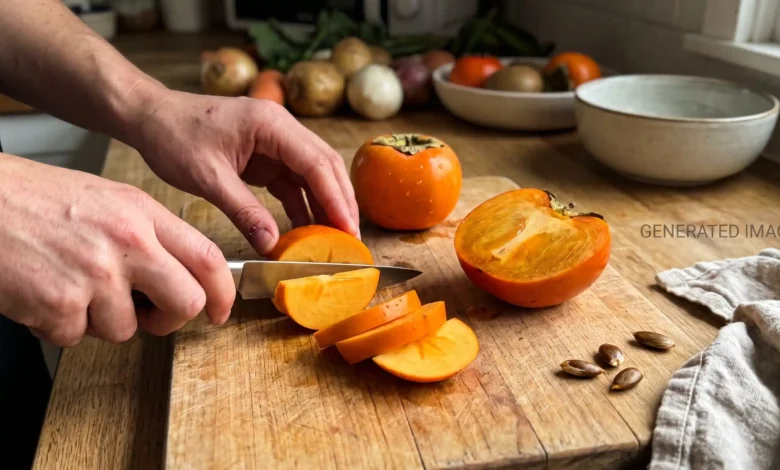
How to Eat Kaki: The Complete Beginner’s Guide
Eating kaki, or persimmons, depends on the variety. Fuyu persimmons are best eaten firm like an apple. Hachiya persimmons must be very soft and jelly-like before eating to avoid an astringent, dry mouth feeling. Always wash them thoroughly before slicing or scooping out the flesh.
Key Takeaways
- Know your variety: Fuyu (round/flat) is sweet when firm; Hachiya (acorn-shaped) is only edible when very soft.
- Wash first: Always rinse your fruit under cool water to remove dirt or wax.
- Avoid the “dry mouth” effect: Never bite into a hard, unripe Hachiya persimmon.
- Versatility: Kaki can be eaten raw, added to salads, or blended into smoothies.
Understanding the Two Main Types of Kaki
Walking into a grocery store, you might see two different shapes of kaki. Knowing which one you have is the secret to a great snack.
| Variety | Shape | Ideal Texture | Eating Style |
| Fuyu | Short, squat, round | Firm, like an apple | Slice and eat raw |
| Hachiya | Tall, acorn-shaped | Soft, jelly-like | Scoop with a spoon |
How to Eat Fuyu Persimmons
Fuyu persimmons are the most popular variety because they are easy to handle. You can treat them almost exactly like you treat an apple.
- Wash and Dry: Rinse the fruit under cold running water.
- Remove the Leafy Top: Use a small knife to cut off the green stem and leaves (the calyx).
- Slice: You have two options. You can slice it into wedges, or you can peel the skin off with a vegetable peeler. The skin is edible, but some people prefer the texture without it.
- Enjoy: Eat the slices plain, or dip them in a little bit of yogurt or nut butter.
How to Eat Hachiya Persimmons
Eating a Hachiya is different. If you try to eat one while it is firm, it will contain high levels of tannins. This causes a very unpleasant, dry, fuzzy feeling in your mouth. You must wait for them to ripen.
- Check for Ripeness: The fruit should be deep orange and feel almost like a water balloon. It should be very soft to the touch.
- Scoop it out: Cut the top stem off. Use a spoon to scoop out the soft, jelly-like pulp directly from the skin.
- Storage Tip: If your Hachiya is still hard, leave it on your counter at room temperature for a few days. You can speed up the process by placing it in a paper bag with an apple or a banana.
Can You Eat the Skin?
Yes, you can eat the skin of a kaki. For Fuyu persimmons, the skin is thin and crisp, similar to an apple skin. Many people prefer to eat it because it contains extra fiber and nutrients.
If you are eating a Hachiya, the skin is usually too thin and delicate to be separated from the mushy inside. Most people simply scoop out the inside and discard the skin, but it is not harmful if you accidentally eat some.
Creative Ways to Use Kaki
Once you master how to eat kaki raw, try these ideas to mix up your routine:
- Salad Topper: Chop Fuyu slices into a salad with arugula, goat cheese, and walnuts.
- Yogurt Parfait: Mash a ripe Hachiya and swirl it into Greek yogurt or oatmeal.
- Baked Goods: Use the pulp of a ripe Hachiya as a substitute for applesauce in muffin or bread recipes.
- Cheese Board: Thinly sliced Fuyu persimmons pair perfectly with sharp cheddar or brie cheese.
[USDA Nutrition Data for Persimmons]
[How to Ripen Fruit Quickly at Home]
Conclusion
Kaki is a fantastic fruit that brings a sweet, honey-like flavor to your diet. The main thing to remember is the difference between the varieties. Stick to crunchy Fuyu for quick snacking, and be patient with the soft Hachiya. Once you understand the preparation, adding these orange gems to your meals is simple and delicious.
FAQS
How do I know if my kaki is ripe?
For Fuyu, firmness is fine. For Hachiya, the fruit must be very soft and yielding, almost like a tomato that is ready to burst.
Is kaki healthy?
Yes. Kaki is packed with Vitamin A, Vitamin C, and dietary fiber. It is a great choice for a heart-healthy snack.
What happens if I eat an unripe Hachiya?
You will experience a strong astringent sensation. Your mouth will feel very dry and chalky for several minutes. It is not dangerous, but it is unpleasant.
Should I refrigerate my persimmons?
If they are ripe, yes. Refrigeration will help them last for a few more days. If they are unripe, keep them on the counter until they reach the desired softness.
Do I need to remove the seeds?
Some kaki varieties have seeds and some do not. If you find large, dark seeds while slicing, simply pop them out with your knife before eating.
Can I freeze kaki?
Yes. Hachiya persimmons freeze very well. You can freeze them whole, then let them thaw on the counter when you are ready to eat them. The freezing process also helps break down tannins.