Supreme Court of the United States: History, Role, and Justices
A factual guide to the highest court in the American judicial system, its constitutional authority, and its historical impact.

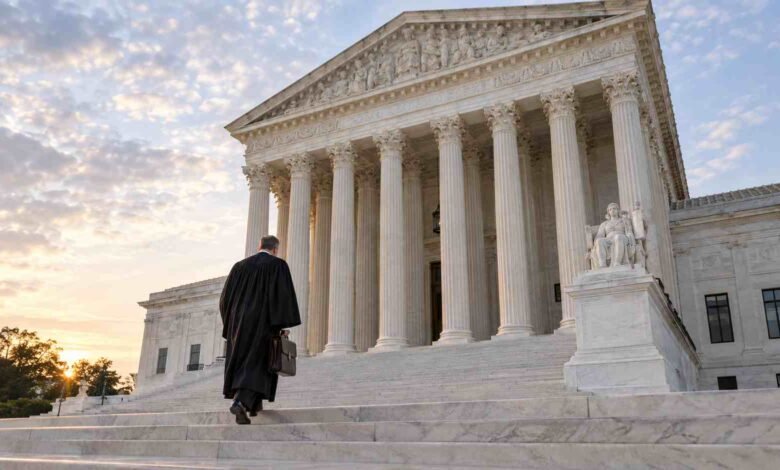
Supreme Court of the United States
The Supreme Court of the United States is the highest court in the American federal judiciary. Established by Article III of the United States Constitution, it holds final authority over all federal courts and state court cases involving federal law.
People frequently search for information about the Supreme Court to understand its composition, its legal authority, and how its decisions shape American law. As the final arbiter of constitutional interpretation, the Court plays a primary role in the United States government. The tribunal consists of the Chief Justice and eight Associate Justices. The President nominates each member, and the Senate confirms the appointments.
The Supreme Court of the United States is the highest judicial body in the country. Established in 1789, it interprets the Constitution and acts as the final court of appeal. The Court consists of nine justices who serve lifetime appointments. It holds final appellate jurisdiction over all federal and state court cases involving federal law.
Quick Facts Table Fact | Detail —|— Institution | Supreme Court of the United States Established | 1789 Authority | Article III of the U.S. Constitution Number of Justices | 9 (One Chief Justice, Eight Associate Justices) Term Length | Lifetime appointment Location | Washington, D.C. First Chief Justice | John Jay
Source Confidence Note Overall Sourcing: Limited Live research unavailable, references cannot be verified. This institutional profile relies entirely on historical and constitutional records. Recent judicial appointments, current term cases, or active legal controversies cannot be confirmed with live data.
Key Takeaways
-
The Supreme Court serves as the final court of appeal in the United States legal system.
-
Justices receive lifetime appointments to maintain judicial independence.
-
The Court exercises judicial review, allowing it to invalidate unconstitutional laws.
-
Rulings issued by the Supreme Court establish binding legal precedents for all lower courts.
-
The justices receive thousands of petitions each year but agree to hear only a small fraction of them.
Founding and Constitutional Authority
The framers of the Constitution created the Supreme Court in 1789. The Judiciary Act of 1789 formally established the Court and set its initial structure. Originally, the tribunal had six justices. Congress changed the size of the Court several times during the 19th century before settling on nine justices in 1869.
The primary power of the institution rests in judicial review. This authority allows the Court to review actions taken by the legislative and executive branches and declare them unconstitutional. The Court established this power for itself in the 1803 case Marbury v. Madison.
How the Court Operates
The Supreme Court functions primarily as an appellate court. It reviews decisions made by lower federal courts and state supreme courts. The Court possesses original jurisdiction in a very small number of situations, such as disputes between different states.
The annual term begins by law on the first Monday in October. During the term, the justices hear oral arguments, discuss cases in private conferences, and draft written opinions. A decision requires a majority vote. The written opinions explain the legal reasoning behind the ruling and serve as precedent for future legal disputes across the country.
The Justices and Appointments
The President of the United States nominates a candidate when a vacancy occurs on the Court. The United States Senate then holds public hearings and votes to confirm or reject the nominee. A simple majority vote in the Senate is required for confirmation.
Once confirmed, justices hold their offices during good behavior, which practically means a lifetime appointment. Justices leave the bench through retirement, resignation, death, or impeachment by Congress. Lifetime tenure is designed to insulate the judicial branch from political pressure and public opinion.
Common Misconceptions
Many people believe the Supreme Court must hear every appeal submitted to it. In reality, the Court exercises discretionary jurisdiction. The justices vote on which cases to accept, a process requiring the agreement of four justices. The Court typically chooses cases that involve significant federal questions or situations where lower courts have issued conflicting rulings.
Another common misunderstanding is that the Court functions as an investigative body. The Supreme Court does not hold trials, call witnesses, or examine new evidence. It reviews only the legal procedures and constitutional interpretations of lower court decisions.
Frequently Asked Questions
What is the Supreme Court of the United States?
It is the highest federal court in the United States, responsible for interpreting the Constitution and acting as the final authority on federal law.
How many justices serve on the Supreme Court?
The Court has nine members. This includes one Chief Justice and eight Associate Justices. Congress established this number in 1869.
How long do Supreme Court justices serve?
Justices serve lifetime appointments. They remain on the Court until they resign, retire, pass away, or are removed through the constitutional impeachment process.
How does a case reach the Supreme Court?
Most cases reach the Court on appeal from lower federal courts or state supreme courts. The losing party files a petition, and the justices decide whether to grant full review.
Where is the Supreme Court located?
The Court sits in the Supreme Court Building in Washington, D.C. It has occupied this specific building since 1935.
Summary
The Supreme Court of the United States operates as the highest authority in the American legal system. By interpreting the Constitution and reviewing lower court decisions, the nine justices shape federal law and establish precedents that govern the entire country. Its structure, including lifetime appointments and discretionary review, aims to provide independent legal oversight. As the final court of appeal, the institution remains a fundamental part of the United States government.