
How to Grow Chickpeas at Home (7 Simple Steps + Pro Tips)
Learning how to grow chickpeas, also known as garbanzo beans, is a fun and rewarding project for home gardeners. To grow chickpeas successfully, plant the seeds directly into well-draining soil in a spot that gets six to eight hours of direct sunlight. Keep the soil lightly moist, and expect to harvest your crop in about 100 days.
Chickpeas are cool-season legumes that thrive in USDA zones 2 through 10. They prefer daytime temperatures between 70 and 80 degrees Fahrenheit. Because they have fragile taproots, you should sow chickpea seeds directly into the garden rather than transplanting them from indoor pots.
Key Takeaways
- Plant seeds directly into the garden 2 to 3 weeks before the last spring frost.
- Choose a sunny location with well-draining, sandy loam soil.
- Space seeds 3 to 6 inches apart in rows.
- Water at the base of the plant to prevent fungal diseases.
- Avoid nitrogen-heavy fertilizers, as chickpeas produce their own nitrogen.
- Harvest green for fresh eating or let them dry on the plant for long-term storage.
Why You Should Grow Your Own Garbanzo Beans
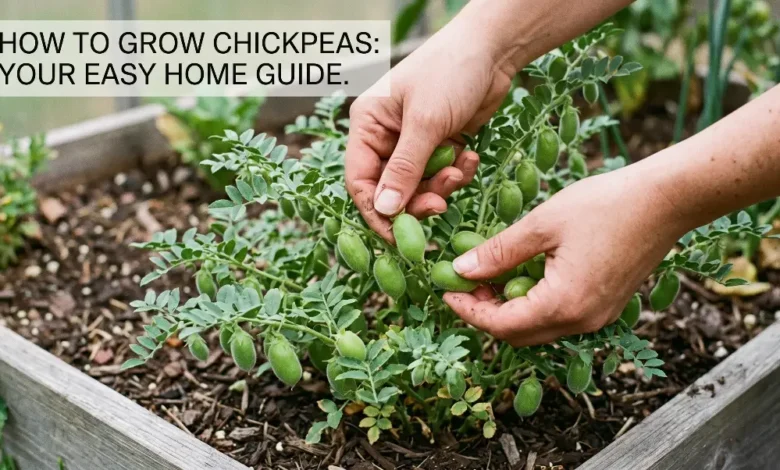
Growing chickpeas at home gives you access to fresh, green garbanzo beans, which are rarely found in grocery stores. The plants form small bushes about 18 to 24 inches tall. Each plant produces dozens of small pods, usually containing one or two seeds inside.
Where and When to Plant Chickpeas
Chickpeas need a specific climate window. They grow best when daytime temperatures stay between 70 and 80 degrees Fahrenheit. If temperatures rise above 98 degrees, the flowers may drop, reducing your yield.
Choosing the Right Planting Method
Because chickpeas hate sitting in wet soil, drainage is your top priority. Here is a quick comparison to help you choose where to plant them.
| Growing Method | Drainage Level | Best For |
| Raised Beds | Excellent | Most home gardeners |
| Containers | Very Good | Small spaces and patios |
| In-Ground | Moderate | Sandy loam soil types |
For timing, sow your seeds outdoors about two to three weeks before your last expected spring frost. If you live in USDA zones 10 or 11, you can plant them in the fall for a winter harvest.
7 Simple Steps to Grow Chickpeas
Follow this process for a successful harvest.
- Prepare the Soil: Choose a spot with full sun. Work in some compost to improve drainage. Aim for a neutral soil pH between 6.0 and 7.5.
- Inoculate the Seeds: For the best growth, coat your seeds with a legume inoculant specific to chickpeas. This helpful bacteria allows the roots to fix nitrogen from the air.
- Sow Directly: Poke holes in the soil 1.5 to 2 inches deep.
- Space Them Right: Plant seeds 3 to 6 inches apart. If you are planting multiple rows, leave 18 to 24 inches between each row.
- Water Carefully: Water the seeds in well. Once they sprout, provide about one inch of water per week.
- Thin the Seedlings: When plants reach 3 inches tall, thin them so the strongest plants are spaced 6 inches apart. Use scissors to snip the extras at the soil line so you do not disturb the neighboring roots.
- Support if Needed: While these bushy plants often support each other, you can use a small trellis or stakes if they start to lean.
Water, Light, and Daily Care
Chickpeas have deep taproots that make them somewhat drought-tolerant once established. However, they need consistent moisture while forming flowers and pods.
Use a drip irrigation system or a soaker hose to water at the soil level. Wetting the leaves encourages fungal problems. Let the top inch of soil dry out slightly between waterings to prevent root rot.
A Common Mistake to Avoid
Many beginners start chickpea seeds indoors in plastic trays. This is a common mistake. Chickpeas develop a sensitive taproot very early. Moving them from an indoor tray to the garden usually causes transplant shock, which stunts or kills the plant. Always direct sow your seeds, or use biodegradable pots that go straight into the ground.
Managing Pests and Diseases
Your biggest threat when growing chickpeas is a fungal disease called Ascochyta blight. This fungus spreads rapidly in wet conditions, causing dark lesions on the leaves and stems. To prevent it, rotate your crops yearly, space plants properly for airflow, and never water from above.
Watch out for aphids and cutworms. You can knock aphids off with a gentle spray of water, and protect young seedlings from cutworms by placing paper collars around the base of the stems. University of California Statewide IPM Program offers excellent resources for identifying aphids and cutworms in your garden.
How and When to Harvest Chickpeas
You can harvest chickpeas in two different ways depending on how you want to eat them.
- For Fresh Eating: Pick the pods when they are green and plump, usually around 85 to 90 days after planting. You can steam them or eat them fresh out of the pod.
- For Dried Beans: Wait about 100 to 120 days until the plant turns brown and the leaves begin to drop. The pods should feel dry and brittle.
To store dried chickpeas, shell them from the pods and keep them in an airtight container in a cool, dark pantry.
Conclusion
Growing chickpeas requires patience, but the fresh harvest makes the effort entirely worth it. By planting at the right time, providing excellent drainage, and watering carefully, you can produce a healthy crop of garbanzo beans right in your backyard.
Next steps for your garden:
- Order chickpea seeds from a reputable seed supplier.
- Map out a sunny, well-draining spot in your garden layout.
- Purchase a drip irrigation hose to keep moisture off the plant leaves.
FAQs
How many chickpeas do you get from one plant?
A single healthy chickpea plant typically produces about 50 pods. Since each pod contains one or two seeds, you can expect roughly 50 to 100 chickpeas per plant.
Can I plant chickpeas from the grocery store?
Yes, you can plant dried, unroasted chickpeas from the grocery store. However, buying certified seed from a garden center ensures better germination rates and disease resistance.
Do chickpeas need a trellis to climb?
No. Chickpea plants grow as small, bushy shrubs rather than climbing vines. They usually top out around 18 to 24 inches tall and support themselves, though a small stake can help if they lean.