

Master how to label photography medium today.
Have you ever stared at a blank gallery card, wondering what exactly to write? Knowing how to label photography medium is a common hurdle for many emerging artists. A simple “photograph” just does not cut it in the professional art world.
Curators and buyers expect precise details about how you created and printed your image. Getting this right shows you respect your craft and understand industry standards. We will break down the exact terms you need to use for your next exhibition or portfolio update.
What is a photography medium?
To correctly label a photography medium, state the specific print method rather than just the capture format. Common industry examples include “Archival pigment print,” “Silver gelatin print,” or “Chromogenic print.” You should display this medium description directly under the artwork’s title and creation year.
Key Takeaways
- Be Specific: Never just use the word “photograph” on a gallery wall label.
- Focus on the Print: The physical print type is your primary artistic medium.
- Know Your Ink: Distinguish between standard inkjet and archival pigment prints.
- Formatting Matters: Follow standard gallery order: Title, Year, Medium, Size, Edition.
Why Accurate Medium Labels Matter
When painters label their work, they write “oil on canvas” or “watercolor.” Photographers must do the same by describing the physical materials of the final piece. The medium is not the camera you used to shoot the image.
Instead, the medium is the physical object hanging on the wall or sitting in the portfolio. Buyers want to know if they are purchasing a museum-quality piece or a standard commercial poster. Your label sets the value and expectations for the artwork.
Incorrectly labeling your work can make you look like an amateur. It can also cause issues with art collectors who expect specific archival qualities. Honesty and precision are always the best policies when presenting fine art.
Why You Should Avoid the Word “Photograph”
Writing “photograph” on a label is incredibly vague. It tells the viewer absolutely nothing about the physical properties of the print. It is the equivalent of a sculptor simply writing “sculpture” on their placard.
Art galleries and museums demand specific material descriptions for cataloging purposes. They need to know how the piece will age and how it should be preserved. Simply stating it is a photograph ignores the intricate physical processes of printmaking.
Furthermore, the term does not differentiate between a mass-produced poster and a handcrafted darkroom print. Specifying the exact medium justifies your pricing. It helps buyers appreciate the physical craftsmanship behind the final image.
The Best Ways to Label Digital Photography
Digital photography dominates the modern art market. However, “digital photo” is too vague for a professional label. You need to identify the exact printing process used by your lab or studio.
Archival Pigment Prints and Giclée
Most high-end digital fine art prints fall into this category. If you use a high-quality inkjet printer with archival inks, label it as an “Archival pigment print.” You can also use the term “Giclée” if printed on acid-free fine art paper.
These terms tell buyers that the image will resist fading for decades. It adds perceived value and sounds highly professional. Most contemporary galleries prefer “Archival pigment print” over “Giclée” today.
C-Prints (Chromogenic Prints)
A chromogenic print, or C-print, is a traditional color photographic print. Today, many labs use lasers or LEDs to expose digital images onto light-sensitive photographic paper. The paper is then processed in traditional liquid chemicals.
If your lab prints digital files this way, you should label the medium as a “Digital chromogenic print” or simply “C-print.” This process merges digital capture with traditional chemical development. It remains a very popular medium for large-scale contemporary photography.
Labeling Traditional and Analog Film
Film photography has its own distinct set of rules. Collectors of analog work pay close attention to the darkroom processes you use. Accuracy here is absolutely essential for preserving historical value.
Silver Gelatin Prints
This is the standard label for traditional black-and-white darkroom prints. If you developed the image using an enlarger and light-sensitive paper, call it a “Silver gelatin print.” It is a classic term recognized by every major gallery and museum.
This label guarantees to the buyer that the image was crafted by hand in a darkroom. It separates true analog prints from black-and-white digital inkjet prints. Always use this term if you are doing wet darkroom work.
Alternative Historical Processes
Some photographers use historic techniques like cyanotypes, platinum-palladium, or wet plate collodion. You should always use the exact historical name for these mediums. These methods are highly respected in the fine art community.
For example, write “Platinum-palladium print on cotton rag paper.” These unique processes often command higher prices, so highlight the specialized materials. Collectors actively seek out these rare, handcrafted photographic objects.
Modern Mounting and Alternative Surfaces
Today, artists print on much more than just paper. You might transfer images to metal, wood, or acrylic. Your label must reflect these unique physical supports to inform the viewer.
Dye Sublimation on Metal
Printing on aluminum is very popular for modern, high-contrast imagery. The actual scientific process is usually dye sublimation. Therefore, your label should read “Dye sublimation on aluminum” rather than just “metal print.”
This technical term sounds much more professional on a gallery wall. It accurately describes how the ink is infused directly into the metal surface. It informs the buyer about the artwork’s extreme durability.
Face-Mounted Acrylic
If you print on paper and mount it behind acrylic, you need to state both materials. A good label would be “Archival pigment print, face-mounted to acrylic.” This gives the viewer a complete understanding of the physical object.
Do not just write “Acrylic Print,” as this is misleading. The image is on paper, while the acrylic simply serves as a protective mounting layer. Clarity here prevents any misunderstandings about the artwork’s construction.
Mixed Media Photography
Sometimes photographers combine printed images with paint, resin, or collage elements. When this happens, the medium becomes mixed media. You must list all primary materials used in the piece.
A correct label might read “Silver gelatin print with hand-applied oil paint.” List the photographic base first, followed by the additional materials. This highlights your unique creative process while maintaining technical accuracy.
Quick Reference Guide for Medium Types
Use this table to quickly find the right term for your specific printing method.
| Print Method | Professional Medium Label | Best Used For |
| Fine Art Inkjet (Archival) | Archival pigment print | Gallery exhibitions, portfolios |
| Standard Inkjet (Non-archival) | Inkjet print | Short-term displays, proofs |
| Lab Color Print (Chemical) | Chromogenic print (or C-print) | Commercial work, editions |
| B&W Darkroom | Silver gelatin print | Fine art film photography |
| Metal Print | Dye sublimation on aluminum | Modern, high-gloss displays |
| Historical B&W | Platinum-palladium print | High-end collector markets |
Standard Gallery Label Formatting
Knowing the right medium term is only half the battle. You also need to format the gallery display card correctly. Consistency is key when presenting your work to the public.
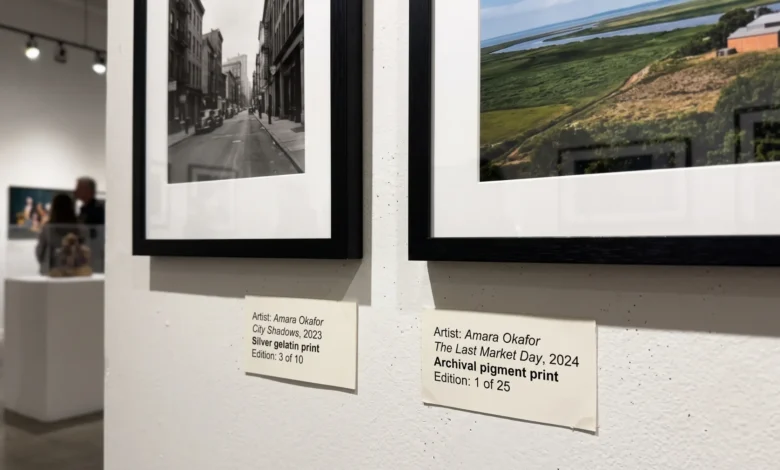
Follow this standard top-to-bottom order for your labels:
- Artist Name
- Artwork Title (usually formatted in italics)
- Year of Creation
- Medium (e.g., Archival pigment print)
- Dimensions (Height x Width in inches)
- Edition Size (e.g., Edition 1 of 10)
Keep the font clean and easy to read from a distance. Mount the labels at roughly eye level, next to the corresponding artwork. [How to hang and label a gallery wall]
Conclusion
Navigating the art world requires speaking the right professional language. You now have the exact vocabulary needed to clearly explain your physical artwork. Avoid generic terms and embrace the specific details of your unique printing process.
Properly labeling your work instantly elevates its perceived value. It builds immediate trust with buyers, collectors, and curators alike. Start presenting your art like a true professional by mastering these essential descriptions.
Next Steps
Ready to upgrade your art presentation? Review your current professional portfolio or upcoming exhibition checklist right now. Change any tags that simply say “photograph” to the specific print mediums outlined in this guide. Consult with your local printing lab if you are unsure about their exact ink and paper specifications. [Find a fine art printing lab near you]
FAQs
Do I include the camera type in the medium label?
No, standard medium labels focus on the final printed object, not the camera. You do not need to list “Nikon Z9” or “35mm camera” on the display card. Only mention the capture format if it is a central conceptual theme of the exhibition.
What if I use standard printer ink, not archival?
If your ink is not archival, you should simply label it an “Inkjet print.” Be aware that high-end galleries prefer archival materials for longevity. Standard inkjet prints will inevitably fade or shift in color over time.
Is a Giclée print the same as an archival pigment print?
Yes, for the most part, they are identical. “Giclée” is a marketing term coined in the 1990s for high-quality inkjet prints. “Archival pigment print” is the more modern, technical term preferred by most contemporary galleries today.
How do I label a photo printed directly onto canvas?
If the image was printed via an inkjet printer onto a canvas surface, label it “Archival pigment print on canvas.” This phrasing clearly states both the printing method and the specific surface material.
Do I need to label the medium if I only post photos online?
Yes, listing the medium on your website prepares buyers for what they will eventually receive. It also shows that you sell physical art objects, not just digital downloads.
Can I just write “Digital Photograph” for my label?
It is highly discouraged in professional settings. “Digital photograph” describes an intangible computer file, not a physical piece of art on a wall. Always describe the final printed output instead.
Should the frame be included in the medium description?
Generally, no. The frame is considered a housing for the artwork, not part of the medium itself. However, you might include the frame’s dimensions separately if the piece is sold exclusively framed.