
How Long to Bake Meatballs Perfectly: 7 Time & Temp Guides
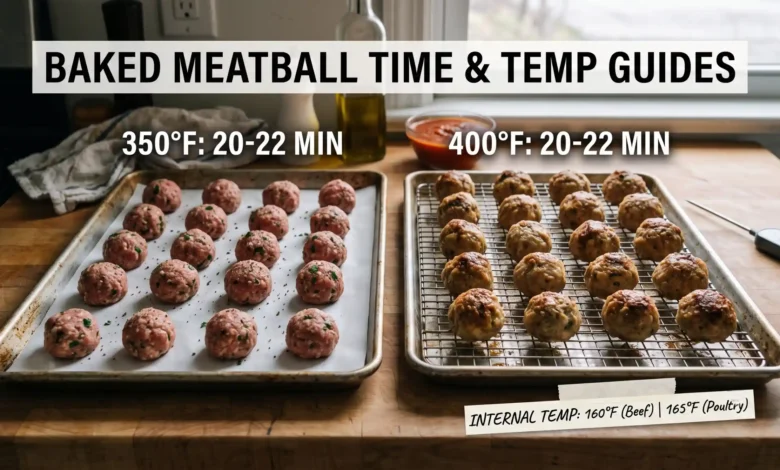
Wondering exactly how long to bake meatballs? The time you need depends entirely on the size of your meatballs and your oven temperature. For a standard one-inch meatball baked at 400 degrees Fahrenheit, you will need about 20 to 22 minutes. If you are baking larger two-inch meatballs, expect them to take closer to 30 minutes. Let us break down the exact timing for every size and meat type so you get juicy, fully cooked results every single time.
To bake meatballs, preheat your oven to 400°F. Place evenly spaced, one-inch meatballs on a lined baking sheet. Bake for 20 to 22 minutes until the outsides are browned. Use a meat thermometer to ensure the centers reach 160°F for beef or 165°F for poultry.
Key Takeaways
- Standard one-inch meatballs take about 20 minutes at 400°F.
- Baking at a higher temperature (400°F) helps create a crispy outer crust while keeping the inside juicy.
- Turkey and chicken meatballs must reach an internal temperature of 165°F.
- Beef, pork, and lamb meatballs are safe at 160°F.
- Using a cookie scoop ensures all your meatballs are the exact same size for even baking.
- Rest your meatballs for 3 to 5 minutes after baking to lock in the juices.
The Ultimate Meatball Baking Time Chart
Most recipes call for baking meatballs at either 350°F or 400°F. We recommend 400°F because the higher heat mimics the browning effect of pan-frying, without the messy oil splatters.
Here is a quick reference table to help you match your meatball size to your oven temperature.
| Meatball Size | Oven Temp 350°F | Oven Temp 375°F | Oven Temp 400°F |
| Small (1/2 inch) | 20 – 22 minutes | 18 – 20 minutes | 15 – 18 minutes |
| Medium (1 inch) | 25 – 30 minutes | 22 – 25 minutes | 20 – 22 minutes |
| Large (1.5 inch) | 30 – 35 minutes | 27 – 30 minutes | 24 – 27 minutes |
| Jumbo (2 inch) | 35 – 40 minutes | 30 – 35 minutes | 28 – 32 minutes |
How Meat Type Affects Baking Time
The type of ground meat you use changes the rules for food safety. While the baking times in the table above remain highly accurate, your final check should always be the internal temperature.
[raUSDA Safe Minimum Internal Temperature Chart]
Beef, Pork, and Veal Meatballs
Traditional Italian meatballs usually feature a mix of ground beef, pork, and sometimes veal. These meats are denser and hold their shape well. According to the USDA, any ground meat made from beef, pork, veal, or lamb must reach an internal temperature of 160°F.
Chicken and Turkey Meatballs
Poultry is leaner and dries out much faster than beef or pork. You have to watch ground turkey and chicken closely. These meatballs are strictly done when they hit an internal temperature of 165°F. Leaving them in the oven even five minutes past this mark can result in a dry, crumbly texture.
4 Steps to Bake Meatballs Evenly
Baking is much easier than standing over a hot stove flipping meat in a skillet. Follow this simple process for the best results.
- Prepare your pan: Line a rimmed baking sheet with aluminum foil or parchment paper. For an extra crispy exterior, place an oven-safe wire rack on top of the baking sheet and lightly spray it with cooking oil.
- Portion evenly: Use a small spring-loaded cookie scoop to portion out your meat mixture. Rolling them all to the exact same size guarantees they finish baking at the exact same minute.
- Space them out: Leave at least half an inch of space between each meatball. If they touch, they will steam instead of roasting, leaving you with a soggy exterior.
- Check the temperature: At the 18-minute mark, pull the pan out and insert an instant-read meat thermometer into the center of the largest meatball on the tray.
A Common Mistake to Avoid
One of the biggest mistakes home cooks make is cutting a meatball open to see if the pink color is gone. Color is a terrible indicator of safety. Ground beef can sometimes look brown inside before it reaches a safe temperature, and smoked meats can remain pink even when fully cooked. Cutting the meatball open also lets all the delicious juices run out onto the pan. Always use a digital meat thermometer. It is the only guaranteed way to know your food is safe to eat and perfectly tender.
How to Tell When Your Meatballs Are Done
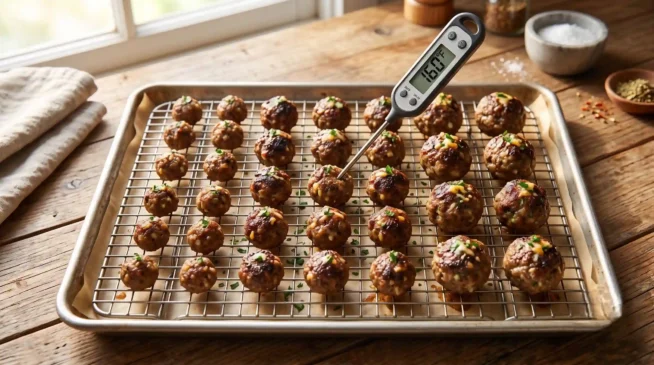
If you do not have a thermometer handy, look for these visual and physical cues.
- The crust: The outside should be deeply browned and slightly crusty.
- The touch: Press lightly on the top of a meatball. It should feel firm and spring back slightly. If it feels mushy, it needs more time.
- The juices: Any juices bubbling out of the bottom of the meatballs should run completely clear, not cloudy or red.
Conclusion
Knowing how long to bake meatballs takes the stress out of dinner preparation. By matching your oven temperature to the size of your meatballs, you can step away from the kitchen and let the oven do the heavy lifting.
Next Steps for Your Kitchen:
- Buy a reliable instant-read digital thermometer to take the guesswork out of baking meat.
- Invest in a set of different-sized cookie scoops to make portioning fast and uniform.
- Try making a double batch next time and freezing half of the baked meatballs for a quick weeknight dinner.
FAQs
Is it better to bake or fry meatballs?
Baking is healthier, requires less cleanup, and allows you to cook a massive batch all at once. Frying gives a slightly crispier crust but requires more hands-on time and added oil.
Do you have to flip meatballs when baking?
No, flipping is not required. However, if you want them evenly browned on all sides, you can rotate the pan and use tongs to flip them halfway through the baking time.
Can I bake frozen meatballs without thawing them?
Yes. If you are baking pre-cooked frozen meatballs, bake them at 350°F for about 15 to 20 minutes until they are heated all the way through.
Why are my baked meatballs tough?
Tough meatballs are usually the result of overmixing the raw meat or packing the balls too tightly. Handle the meat gently and only mix until the ingredients are just combined.
Should I cover meatballs with foil when baking?
Do not cover them with foil. Covering them traps the steam, which prevents them from getting that desirable brown crust on the outside. Bake them uncovered.