
The Kennedy Center Tarp Removed: Full Story Behind tScaffolding and Name Erasure
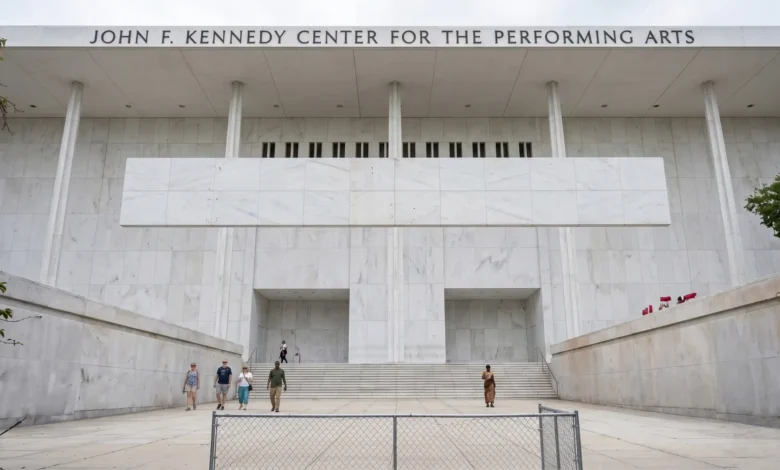
The drama in Washington D.C. has reached a highly visible conclusion. For over a week, locals and tourists noticed something strange happening at one of the nation’s most famous memorials. A massive sheet completely blocked the building’s iconic facade. Today, with the kennedy center tarp removed, the public finally has answers. The barricades are gone, and a highly contested political fight has ended.
This visual cover-up was not a standard maintenance project. It was the center of a heated legal battle involving a former president, a federal judge, and passionate political activists.
The kennedy center tarp removed this week finally revealed the building’s restored facade, confirming the court-ordered erasure of Donald Trump’s name. The tarp and scaffolding were initially erected to hide the sign after a federal judge ruled the renaming illegal, sparking a major political controversy over a perceived cover-up.
Key Takeaways
- Legal Action: A federal judge ruled that adding Donald Trump’s name to the center violated federal law.
- Missed Deadlines: Crews missed the initial June 12 deadline to remove the lettering, completing the job under the cover of night.
- The Cover-Up: Instead of revealing the restored wall, officials hid the facade behind tarps, citing “maintenance needs.”
- Activist Intervention: The group “Hands Off the Arts” captured exclusive photos proving the name was gone despite the physical barriers.
- Final Removal: Following massive political pressure and new court filings on June 22, the scaffolding finally came down.
A Legal Fight Over a National Memorial
Congress officially established the John F. Kennedy Center for the Performing Arts in 1964. Following President Kennedy’s assassination in November 1963, his successor, President Lyndon B. Johnson, signed the bill into law. The building serves as a living, breathing national memorial to the 35th president.
Recently, Donald Trump’s name was controversially added to the building’s exterior. This move sparked immediate backlash from lawmakers and the public alike. Representative Joyce Beatty (D-Ohio), an ex officio board member, spearheaded a high-profile lawsuit to reverse the change.
A US federal judge ultimately sided with Beatty. The judge ruled that the renaming was an illegal act. It directly violated the federal law designating the facility specifically as a memorial to John F. Kennedy.
The Midnight Removal
The court gave the administration a strict deadline of June 12 to remove the unauthorized lettering. However, the 14-member crew assigned to the task missed the official cutoff.
Workers were spotted taking down the heavy letters around 3 a.m. on Saturday, June 13. Lawyers confirmed in a morning court filing that the physical work was complete. But instead of showing the clean facade to the public, a new problem emerged.
The “Shame Scaffolding” Controversy
While the controversial letters were gone, the view remained entirely blocked. The center left extensive scaffolding and heavy tarps in place. Security guards manned barricades, actively keeping the public from approaching the building.
Kennedy Center spokeswoman Roma Daravi released a statement defending the barriers. She claimed the tarps would stay up as crews addressed the “maintenance needs of the marble and soffit panels.” Critics immediately pushed back against this explanation.
Lawmakers and activists accused the administration of hiding the defeat. Representative Jamie Raskin (D-MD) took to social media, calling the structure a “literal cover-up.” He accused the former president of vandalizing federal property.
“Petulant Defiance”
Tensions escalated rapidly. On Friday, lawyers for Rep. Beatty filed a scathing response. They accused Trump and his board allies of willfully sabotaging the iconic facade to “massage broken egos.”
House Democrats on the Transportation and Infrastructure Committee also weighed in. They demanded the immediate removal of what they labeled the “shame scaffolding.” By Monday afternoon, June 22, a new court document accused the center of keeping the tarps up in “petulant defiance.”
Activists Uncover the Truth
The public wanted proof that the legal order was actually followed. The activist group “Hands Off the Arts” decided to take matters into their own hands. Co-founder Mallory Miller and her team managed to secure photos from behind the heavy tarps.
These exclusive images provided the first clear look at the building’s exterior. They showed two rows of blank square panels where the previous name used to sit. The Washington Post independently verified the photos, bringing the truth to the national spotlight.
“This is the picture the Trump administration does not want anyone to see,” Miller stated. She emphasized that the public deserved the opportunity to witness a hard-fought victory.
The Kennedy Center Tarp Removed at Last
The combination of leaked photos, congressional anger, and aggressive legal filings finally broke the stalemate. Days after the heated June 22 court document, the massive tarp was taken down.
Jack Schlossberg, a congressional candidate and the grandson of John F. Kennedy, previously accused Trump of attacking his grandfather’s legacy. Now, with the physical barriers completely gone, that legacy stands clearly visible once again. The original marble facade is fully exposed, completely free of the contested signage.
Timeline of the Tarp Controversy
The sequence of events moved incredibly fast. Here is a breakdown of the legal and physical milestones:
| Date | Event Description |
| June 12 | The court-ordered deadline to remove the unauthorized signage passes. |
| June 13 (3 a.m.) | Crews successfully detach the lettering under the cover of night. |
| June 13-21 | Scaffolding and tarps block the view. Guards prevent public access. |
| Mid-June | Activist group “Hands Off the Arts” captures photos from behind the tarp. |
| June 22 | A new court document accuses the center of “petulant defiance.” |
| Late June | The tarp is officially removed, revealing the restored wall. |
Conclusion: A Restored Legacy
The battle over the Kennedy Center’s facade was about much more than just building aesthetics. It highlighted the deep legal protections surrounding national memorials. With the tarp finally gone, the building returns to its original, lawful state. The prolonged legal fights, the midnight construction work, and the activist interventions have all concluded with the restoration of the center’s intended tribute.
Next Steps
If you want to support the preservation of national monuments, stay informed about the Transportation and Infrastructure Committee activities. You can also monitor your local historical sites. Public attention and swift legal action are highly effective tools for protecting cultural landmarks.
Frequently Asked Questions (FAQs)
Why was a tarp covering the Kennedy Center?
Officials erected scaffolding and a large tarp to cover the building’s facade after removing Donald Trump’s controversially added name. Officials claimed it was for marble maintenance, but critics called it a political cover-up.
Who ordered the removal of the name?
A US federal judge ordered the removal. The judge ruled that adding the name violated the 1964 federal law designating the building as a memorial exclusively to John F. Kennedy.
Who filed the lawsuit against the name change?
Representative Joyce Beatty, a Democrat from Ohio and an ex officio board member of the center, led the lawsuit that resulted in the court order.
How did the public find out the name was actually gone?
An activist group called “Hands Off the Arts” managed to take pictures from behind the scaffolding. These photos proved the lettering was removed before the tarp officially came down.
Did the workers meet the court deadline?
No. The court ordered the removal by June 12. The 14-member work crew missed the deadline slightly, finishing the job around 3 a.m. on June 13.
What did politicians say about the scaffolding?
Lawmakers were highly critical. Rep. Jamie Raskin called it a “literal cover-up,” while House Democrats referred to the structure as “shame scaffolding” kept up in “petulant defiance.”