

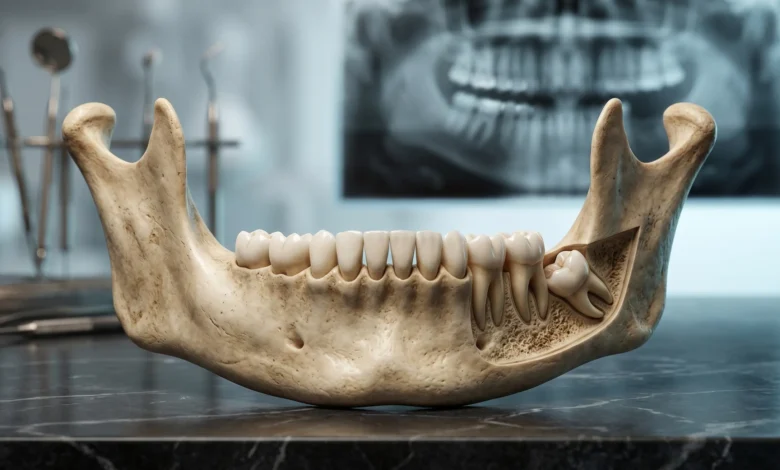
Missing Wisdom Teeth? Why 20% to 30% Are Born Without Them
If you have made it into your twenties without seeing a single wisdom tooth erupt, you might not just be lucky. You might belong to a unique branch of modern human development.
While third molars have long been viewed as an inevitable coming-of-age hurdle, modern clinical research proves they are not universal. Thanks to targeted genetic evolution and regional demographics, millions of people never form wisdom teeth at all. Dentists and oral surgeons call this condition third molar agenesis.
No, not everyone has wisdom teeth. Globally, between 20% and 30% of the population is born congenitally missing at least one third molar. This biological condition, known as third molar agenesis, prevents the tooth buds from ever forming underneath the gums, primarily due to hereditary genetic mutations.
Key Takeaways
- Not Everyone Has Them: Between 20% and 30% of people globally skip developing at least one wisdom tooth entirely.
- The Power of Genetics: Specific mutations in genes like PAX9 and MSX1 prevent third molar buds from forming in childhood.
- Upper Jaw Advantage: Missing wisdom teeth are statistically more likely to occur in your upper jaw (maxilla).
- Demographic Differences: Asian populations show significantly higher rates of missing third molars than North American populations.
- Missing vs. Impacted: A tooth that never grew is structurally different from an impacted tooth that is trapped below the gum line.
Quick Answer
If you cannot see your wisdom teeth, you fall into one of two categories. Either the teeth never developed in your jawbone (agenesis), or they developed but are trapped beneath the gum tissue (impaction). You cannot tell the difference by looking in a mirror. Only a panoramic dental X-ray can confirm whether you are truly missing your third molars.
The Statistical Reality: Who Bags a Pass on Third Molars?
While it might feel unusual to miss out on a supposed rite of passage, lacking third molars is incredibly common. The worldwide average for third molar agenesis sits at roughly 22.6%. However, your personal odds fluctuate heavily based on your background.
Global vs. Domestic Numbers
Geography and ethnicity play massive roles in dental development. North American and European populations display an agenesis rate of 10% to 25%. In sharp contrast, Asian populations frequently scale between 30% and 41%. If your family lineage originates from a region with high agenesis rates, your chances of a toothless back jaw go up significantly.
The Sex and Symmetry Factor
Missing teeth do not happen randomly. Clinical data highlights clear physiological leanings in how agenesis occurs across the population.
Females hold a roughly 14% higher statistical likelihood of skipping one or more wisdom teeth compared to males. Furthermore, it is significantly more common to lack wisdom teeth in the upper arch (maxilla) than the lower arch (mandible).
When examining patients with agenesis, dentists typically observe one of two patterns:
- Missing one or two teeth: This is the most common scenario. Most people with agenesis still develop at least one wisdom tooth.
- Missing all four teeth: This is the least common scenario. Being born with a complete absence of all third molars is rare, but entirely normal.
Biological Blueprint: Why Some Teeth Never Form
Tooth formation starts long before birth. If the biological signals fail early on, the tooth buds never organize in the jaw tissue.
The Genetics of Agenesis (PAX9 and MSX1 Genes)
The absence of wisdom teeth usually comes down to hereditary genetics. Mutations within the PAX9 and MSX1 genes disrupt the early structural mapping of your teeth. [National Center for Biotechnology Information]
If these genes mutate, the body simply skips the third molar stage. As Healthline (2020) notes, “The absence of third molars could involve genetics. So if one of your parents doesn’t have wisdom teeth, you may not have them either.”
Evolutionary Trajectory: Shifting Jaws
Early human predecessors, such as Homo erectus, universally required and developed all four heavy-duty third molars. They needed raw chewing power to grind coarse roots, nuts, and raw meats.
As human diets evolved to include softer, cooked foods, masticatory strain dropped. This dietary refinement reduced the selective pressure to maintain large jaws and extra molars. Over thousands of years, human bodies began phasing them out.
Common Mistake: Many people assume a small jaw physically stops wisdom teeth from growing. This is false. Clinical research shows no significant association between physical jaw size and tooth formation. Jaw size only determines if a tooth gets impacted. Genetics dictate whether the tooth forms in the first place.
Practical Tooling: Missing vs. Impacted Third Molars
A major point of confusion for patients is figuring out exactly why their back teeth never showed up. How do I know if my tooth is safely non-existent or dangerously hidden?
You cannot answer this question just by looking in a mirror or feeling your gums. A tooth that never grew (agenesis) requires a completely different approach than a tooth that formed but got stuck (impaction).
The Diagnostic Matrix
| Clinical Characteristic | Third Molar Agenesis (Missing) | Third Molar Impaction (Trapped) |
| Tooth Bud Existence | Completely absent from jawbone | Fully formed but physically blocked |
| Common Symptoms | None (Zero pain or swelling) | Jaw pressure, localized aching, gum swelling |
| X-Ray Presentation | Clear bone space where root should sit | Tooth visible at abnormal angles below gum line |
| Clinical Resolution | No treatment or monitoring required | Observation or preventive oral surgery |
Mini Case Studies
- Scenario A (Agenesis): A 25-year-old with zero back-jaw sensitivity learns during a standard preventive dental visit that they have complete third molar agenesis. The bone is smooth and empty. No surgical action is ever required.
- Scenario B (Impaction): A 19-year-old struggles with persistent jaw tightness and mild swelling. A panoramic image shows all four third molars developed normally, but they are severely impacted at a horizontal slant. They require a referral to an oral surgeon.
Mid-Article Quick Check:
- If you cannot see your back molars, do not guess your status.
- Agenesis means the teeth do not exist at all, requiring no medical action.
- Impaction means they are present but stuck, which can threaten adjacent teeth.
- Only a specialized panoramic X-ray can confirm which path your body took.
Practical Tooling: The Dental Development Timeline
If you are a parent or a teen wondering when to check on these teeth, you need a tracking plan. Wisdom teeth develop on a very predictable schedule.
Milestone Windows
- Ages 7 to 10 (Early Seeding): Third molar buds begin their initial formation deep inside the jaw tissues.
- Ages 12 to 15 (Crown Calcification): The crowns of the teeth begin hardening. A dentist can often spot initial tracking on diagnostic layouts.
- Ages 15 to 17 (The Ideal Screening Window): This is the optimal developmental checkpoint for a dedicated panoramic radiograph. At this age, a dentist can detect early impactions, determine growth angles, or confirm complete agenesis.
- Ages 17 to 25 (The Eruption/Impaction Era): This is the common phase where fully developed molars attempt to erupt through the tissues or require extraction.
Pro Tip: Do not assume you are “missing” your wisdom teeth just because you cannot see them. Always confirm with a panoramic X-ray. If your radiograph confirms you are congenitally missing a wisdom tooth, ask your dentist to monitor your other teeth carefully. Clinical research shows that third molar agenesis is statistically linked to a higher frequency of missing other permanent teeth.
The Clinical Landscape: When Wisdom Teeth Are Present
While skipping wisdom teeth is a common biological variation, the majority of the population does develop at least one. For those individuals, the path forward often requires intervention.
The Reality of Impaction
For the portion of the population whose bodies do construct third molars, approximately 36.9% experience impaction issues. This means the tooth grows at an angle that prevents it from fully breaking through the gum tissue, often pressing painfully against the adjacent second molar.
[American Association of Oral and Maxillofacial Surgeons]
The Scale of Modern Care
Impaction is incredibly common, which is why preventive removal is a standard procedure. Every year, oral healthcare providers in the United States perform roughly 10 million third molar extractions to avoid structural crowding, localized infections, and alignment shifts.
However, surgery is not always mandatory for teeth that grow in straight. As the Cleveland Clinic advises: “Wisdom teeth are vestigial features… If your wisdom teeth erupt in alignment and don’t cause issues, you may not need to do anything.”
Summary & Actionable Next Steps
Skipping wisdom teeth is a common biological variation driven by targeted genetic markers like PAX9. It is not an abnormality. Instead, it is a functional demonstration of ongoing human evolution adjusting to softer diets and changing jaw mechanics. If you do not have them, your body is simply skipping a step it no longer needs.
What to do next:
- Step 1: Review your family history. Ask your parents or siblings if missing third molars runs in your genetic lineage.
- Step 2: Request a comprehensive panoramic radiograph at your next dental exam to conclusively differentiate true absence from silent impaction.
- Step 3: If teeth are present but beneath the gum line, work with your dentist to set up a tracking schedule to prevent future crowding.
FAQs
Is it rare to not have wisdom teeth?
No, it is a very common biological trait. Around 20% to 30% of the population skips forming at least one wisdom tooth entirely.
Does missing wisdom teeth mean you are more evolved?
From a practical standpoint, yes. It reflects a long-term evolutionary shift toward smaller human jaws and softer diets that no longer require extra grinding molars.
At what age can you confirm if you have wisdom teeth?
While initial formations occur earlier in childhood, a clear diagnosis is best handled via a panoramic X-ray screening between ages 15 and 17.
Can wisdom teeth grow after age 30?
They do not develop new roots at this stage. However, a fully formed tooth that was trapped below the gum line can occasionally shift and erupt later in life due to changing jaw structures or bone loss.
Why would someone only have two wisdom teeth?
Genetics often work unevenly. It is highly common to experience partial agenesis, where only one or two tooth buds form, rather than all four.
Are you born without wisdom teeth if your parents don’t have them?
Your chances are much higher. Third molar agenesis is heavily tied to mutations in genes like PAX9 and MSX1, which are hereditary traits passed down from parents.
How do I know if my wisdom teeth are missing or just impacted?
You cannot determine this by touch, pain level, or looking in a mirror. A panoramic X-ray is required to check inside the bone structure.
Does missing a wisdom tooth affect your chewing ability?
Not at all. Modern human diets do not require the heavy grinding power of third molars, which is why humans are slowly evolving past the need for them.
References
- Biology, MDPI, 2021
- Harvard DASH / Systematic Review, 2015
- PLoS ONE, 2016
- University of the Pacific / Scholarly Commons, 2019
- Journal of Clinical Medicine, 2024
- American Journal of Public Health, 2007
- Healthline, 2020
- Cleveland Clinic, 2025