
Rising pharma chlorthalidone recall facts and next steps.
Finding out your daily blood pressure medicine might not work is a scary moment. Right now, thousands of patients are checking their medicine cabinets. A major rising pharma chlorthalidone recall has just hit the United States. If you take this popular water pill to manage your hypertension, you need to know the facts. Let’s break down exactly which bottles are affected, why they failed quality tests, and what you should do next to keep your heart safe.
The FDA announced a rising pharma chlorthalidone recall in June 2026 after 11,460 bottles of the 25mg blood pressure medication failed dissolution tests. Patients with lots RISA24001 and RISB24002 should consult their doctor before stopping the drug, as abrupt withdrawal poses severe risks.
Key Takeaways
- Massive Scope: The recall affects 11,460 bottles of 25mg Chlorthalidone tablets.
- Primary Distributor: Rising Pharma Holdings distributed the flawed medication nationwide.
- Safety Defect: The pills failed a dissolution test, meaning they do not dissolve properly in the body.
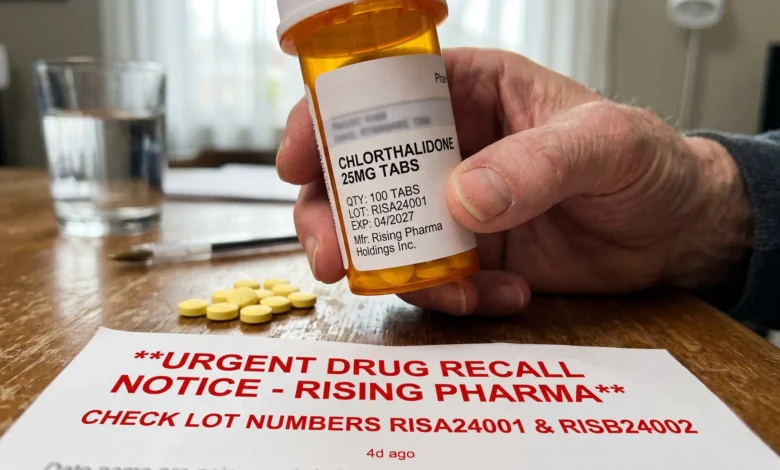
- Targeted Batches: Affected batch numbers are RISA24001 and RISB24002.
- Medical Warning: Never stop taking blood pressure medicine without professional medical advice.
Why Is There a Rising Pharma Chlorthalidone Recall?
On June 5, 2026, Inventia Healthcare Limited initiated a massive voluntary recall. They pulled 11,460 bottles of Chlorthalidone Tablets USP, 25 mg from pharmacy shelves across the country. Rising Pharma Holdings Inc., based in New Jersey, served as the primary distributor for these specific batches.
The core issue comes down to a failed dissolution specification. During routine quality testing, inspectors discovered that the tablets did not break down correctly. This is a serious manufacturing flaw for any prescription drug.
The Manufacturing Source
Drug supply chains are highly connected. Inventia Healthcare Limited manufactured these specific pills in India. After production, they shipped the medication to the United States.
Once in the U.S., Rising Pharma Holdings handled the distribution. They shipped the bottles out from their New Jersey headquarters to pharmacies nationwide. This complex process shows why strict quality testing matters at every single step.
Understanding Failed Dissolution in Medication
When you swallow a pill, your stomach acids must break it down. This process releases the active ingredients into your bloodstream. If a pill fails dissolution testing, it stays too solid for too long.
As a result, your body absorbs less of the actual medicine. For a drug meant to lower blood pressure, this means you might not get the full 25mg dose. You could be taking your medication every single day but still facing dangerously high blood pressure levels.
How to Identify the Recalled Chlorthalidone Bottles
You do not need to panic, but you do need to check your prescription bottles right away. The recall does not impact all chlorthalidone prescriptions. It only targets specific batches packaged and distributed by Rising Pharma.
Look closely at the label on your medicine bottle. You want to check the lot number and the expiration date. Pharmacists usually print this information on the side or bottom of your prescription label.
Official Recall Data and Lot Numbers
| Manufacturer | Distributor | Medication & Dosage | Batch Numbers | Expiration Date |
| Inventia Healthcare Ltd. | Rising Pharma Holdings Inc. | Chlorthalidone Tablets USP, 25 mg | RISA24001 | April 2027 |
| Inventia Healthcare Ltd. | Rising Pharma Holdings Inc. | Chlorthalidone Tablets USP, 25 mg | RISB24002 | April 2027 |
If your bottle matches these batch numbers, you have the defective product. The recall applies to both the standard 100-count and the larger 1,000-count bottle sizes.
Why Do Doctors Prescribe Chlorthalidone?
Chlorthalidone is a widely used diuretic, often called a “water pill.” Doctors prescribe it to help patients eliminate extra water and salt from their bodies. This process effectively lowers high blood pressure.
It also treats fluid retention caused by congestive heart failure, severe kidney disease, and liver problems. Managing hypertension prevents heart attacks, strokes, and kidney failure. Because the stakes are high, taking an effective, fully dissolving pill is absolutely necessary.
You can read more about how water pills manage heart conditions by reviewing the Mayo Clinic’s guide to diuretics.
The Role of Diuretics in the Body
Your kidneys act as a massive filtration system. Chlorthalidone targets the kidneys directly. It forces your body to push excess sodium and water into your urine.
When you lose that extra fluid, your blood volume drops. Less blood volume means less pressure pushing against your artery walls. This simple mechanism saves lives every day, but it only works if the drug enters your system properly.
The Potential Health Risks of Ineffective Diuretics
Taking a pill that fails to dissolve properly leaves you vulnerable. Your body simply misses out on the prescribed dose. This can cause your blood pressure to spike unexpectedly, even if you follow your daily schedule strictly.
Sudden spikes in blood pressure often happen silently. You might not feel any different, but the internal damage still occurs. Uncontrolled hypertension puts massive stress on your arteries and heart muscle.
Silent Symptoms of High Blood Pressure
High blood pressure is famously called the silent killer. You can walk around with dangerously high numbers and feel completely normal. However, if your defective pill fails to control your condition, some physical warning signs might appear.
Look out for severe headaches that do not go away. You might also experience sudden shortness of breath during normal activities. Nosebleeds and chest pain are also major red flags that require emergency medical attention.
What Should You Do if You Have the Recalled Pills?
Do not throw your medication in the trash just yet. More importantly, do not abruptly stop taking your daily pill. Stopping blood pressure medicine cold turkey is incredibly dangerous and can trigger massive rebound hypertension.
You need to handle this situation carefully and methodically. Here is exactly what you should do next.
Medical Next Steps for Patients
- Do not panic or stop taking the pills. Sudden stops cause dangerous health spikes.
- Check your bottle’s label. Locate the lot number near the expiration date.
- Call your local pharmacy. Tell them you have a recalled batch.
- Exchange the bottle. Get a newly verified batch of medication from your pharmacist.
- Report adverse effects. If you felt sick, use the FDA MedWatch online portal to file a safety report.
Call your pharmacist as your very first step. They deal with recalls constantly and will check your lot number over the phone. They will provide a safe replacement from a different, unaffected batch right away.
Proper Disposal of Defective Medication
Once you get a safe replacement from your pharmacist, do not flush the old pills down the toilet. Flushing drugs contaminates local water supplies. You also should not throw them directly into your kitchen trash.
Ask your pharmacist if they have a take-back program. Many drug stores have secure drop-boxes near the pharmacy counter. You can safely discard the defective bottles there to protect the environment and prevent accidental poisonings.
How the FDA Handles Drug Recalls
Drug recalls happen more often than you might think. When a company finds a manufacturing defect, they usually issue a voluntary recall to protect the public. This is exactly what happened with Inventia Healthcare Limited in early June.
The FDA then steps in to monitor the situation. They classify the severity of the recall based on the public health risk. They continue to monitor adverse reaction reports from patients and doctors to determine any required legal steps.
Conclusion: Final Verdict on the Recall
Manufacturing errors happen, but you should never have to guess if your daily medication works. The recent recall of these 25mg tablets highlights the absolute necessity of strict FDA quality testing. Failed dissolution might sound like technical jargon, but it directly impacts your cardiovascular health. The data clearly shows that patients taking the affected batches face an unnecessary risk of uncontrolled blood pressure.
Next Steps for Your Heart Health
Check your medicine cabinet immediately. If your pills belong to batch RISA24001 or RISB24002, call your pharmacy to organize a safe replacement. Do not skip your daily dose while waiting for new pills. Finally, consider signing up for the FDA’s email alert system so you never miss another medication safety warning in the future.
FAQS
What is the rising pharma chlorthalidone recall?
It is a June 2026 voluntary recall of 11,460 bottles of 25mg Chlorthalidone tablets. The pills failed quality tests because they do not dissolve properly in the human body.
How do I know if my medication is recalled?
Check the lot number on your prescription bottle. The affected batches are RISA24001 and RISB24002. Both carry an expiration date of April 2027.
Is it safe to stop taking my chlorthalidone?
No. Never stop taking your blood pressure medication abruptly. Doing so can cause dangerous spikes in your blood pressure. Speak to your pharmacist for a safe replacement first.
What does a failed dissolution test mean?
It means the pill does not break down fast enough in your digestive system. Because of this, your body cannot absorb the correct amount of the active drug, lowering its effectiveness.
Who distributed the defective chlorthalidone pills?
Rising Pharma Holdings Inc., located in New Jersey, distributed the recalled batches. Inventia Healthcare Limited manufactured the actual pills in India.
Can I get a refund for the recalled medication?
Yes, in most cases. Your local pharmacy will usually exchange the defective pills for a safe batch at no extra cost to you.
Are other blood pressure medications part of this recall?
No, this specific action only targets the two identified batches of 25mg Chlorthalidone. However, other blood pressure drugs have faced completely separate recalls recently.