
Smart Home Devices: Skincare Tips That Actually Work
Your bathroom drawer might be a graveyard of expensive beauty gadgets. You bought them hoping for clinical results, but they ended up gathering dust. The problem is rarely the technology itself. It is usually how you use it.
The intersection of the Internet of Things (IoT) and aesthetic technology offers real benefits for your skin. However, a true smart routine requires more than just a wand. It combines environmental tech to protect your skin barrier with targeted devices to stimulate the dermis beneath it. You also need realistic expectations about what at-home tools can achieve.
The most effective smart home skincare routine combines environmental technology, like IoT humidifiers to protect the skin barrier, with FDA-cleared targeted devices such as LED masks, microcurrents, and radiofrequency tools. For visible results, you must use these devices consistently on properly prepped skin for at least six to eight weeks.
Key Takeaways
- Home anti-aging devices use legally mandated lower energy limits than clinical tools, requiring patience for visible changes.
- Smart humidifiers protect the skin’s moisture barrier and manage dry climate conditions like eczema.
- Automated lighting routines that eliminate blue light before bed help prevent cortisol-driven collagen degradation.
- Microcurrent devices only work effectively and painlessly when paired with a water-based conductive gel.
- LED therapy masks require completely clean, dry skin and opaque eye protection for safe use.
- Radiofrequency treatments heat the dermis and may cause mild redness, but they should never feel uncomfortably hot.
Quick Start: The “Which Device Do I Need?” Decision Matrix
If you are unsure where to start, use this matrix to match your primary skin goal with the correct at-home technology.
| Primary Skin Concern | Recommended Technology | Mechanism of Action | Expected Timeline |
| Acne & Breakouts | Blue LED Light Therapy | Kills acne-causing bacteria on the skin surface. | 2–4 weeks |
| Sagging & Muscle Tone | Microcurrent | Stimulates facial muscles using low-level electrical currents. | Immediate lift; 4 weeks for lasting tone |
| Dullness & Wrinkles | Red LED Light Therapy | Stimulates collagen production at the cellular level. | 6–8 weeks |
| Skin Laxity (Loose Skin) | Radiofrequency (RF) | Heats the deeper dermis layer to trigger collagen remodeling. | 8–12 weeks |
The Foundation: Environmental Smart Home Skincare
Most people think of handheld gadgets when they hear “skincare tech.” However, the most impactful smart devices manage the room you sleep in. Your skin’s outer layer—the stratum corneum—reacts directly to your environment.
Smart Humidifiers and the Moisture Barrier
Indoor heating and air conditioning strip moisture from the air. This causes trans-epidermal water loss, where your skin loses hydration directly into the environment. Using a home humidifier helps maintain the skin’s moisture barrier. Functional medicine experts and dermatologists often recommend them to manage conditions like eczema in dry climates.
Pro Tip: You do not necessarily need a $300 Wi-Fi humidifier. You can plug a standard humidifier into a cheap smart plug, pair it with a room humidity sensor, and automate it to run whenever the room drops below 40% humidity.
Automated Circadian Lighting for Collagen Preservation
Your skin repairs itself while you sleep. Exposure to blue light from screens and harsh indoor lighting late at night disrupts this process.
According to board-certified dermatologist Dr. Maral Skelsey, “Sleep deprivation elevates cortisol levels which drives collagen degradation.”
A smart home routine that promotes better sleep directly improves your skin. Program your smart home hub to shift your lights to warm, dim tones 60 to 90 minutes before your bedtime. This eliminates blue light exposure and supports your natural circadian rhythm.
Common Mistake: Spending hundreds of dollars on anti-aging creams while sleeping in a dry room under bright LED lights. Environmental stressors will cancel out your topical products.
At-Home Beauty Devices: The Clinical Reality
At-home facial rejuvenation devices use radiofrequency (RF), light-emitting diodes (LED), and microcurrent technologies to stimulate the skin. They rely on basic physics: light, heat, and electricity. However, you must understand their limitations.
Because home anti-aging devices lack professional medical supervision, manufacturers intentionally design them with lower energy output levels compared to in-office clinical medical devices. [FDA guidelines on cosmetic devices]
The Clinical vs. At-Home Reality Check Table
| Feature | In-Office (Med-Spa) | At-Home FDA-Cleared Device |
| Energy Output | High (Requires medical supervision) | Low (Capped for consumer safety) |
| Cost per Treatment | $200 – $800+ per session | One-time device cost ($150 – $500) |
| Time to Results | 1 to 3 sessions | 15 to 40 sessions (Consistent use) |
| Risk Profile | Moderate (Burns, scarring possible if misused) | Low (Mild redness or temporary swelling) |
LED Light Therapy Masks (Red & Blue Light)
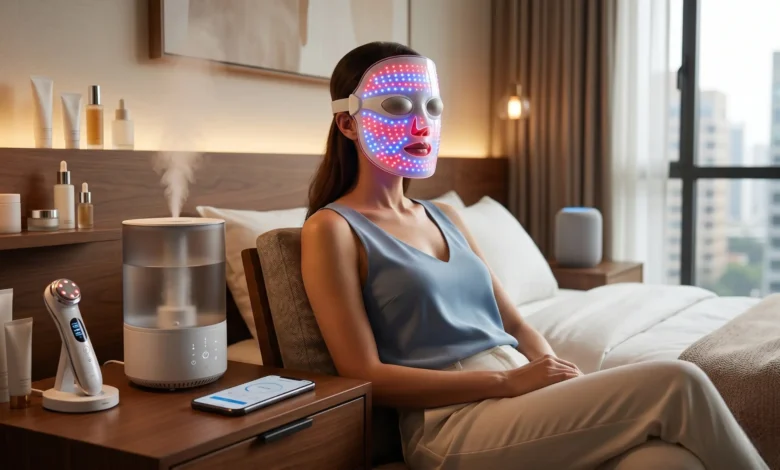
LED masks use specific wavelengths of light to trigger cellular responses. Blue light targets bacteria, while red light reduces inflammation and builds collagen.
Visible results from a red LED mask typically take six to eight weeks of consistent use. A standard routine requires wearing the mask for 10 to 20 minutes, three to five times per week.
Pro Tip: Clean Skin Only. Never apply thick serums, oils, or sunscreens before using an LED mask. These products can reflect the light and block it from penetrating your skin.
Pro Tip: Eye Protection is Non-Negotiable. Always use the provided opaque goggles when utilizing at-home LED masks or IPL devices to prevent potential eye damage.
Microcurrent Facial Toning
Microcurrent devices send low-level electrical currents into your facial muscles, essentially giving them a workout.
“Microcurrent devices necessitate a conductive gel to allow the electrical current to pass safely and comfortably into the skin without pain,” notes Dr. Skelsey.
Pro Tip: Hydrate for Microcurrents. Microcurrents travel through water. Drinking a glass of water before your session and applying a generous layer of water-based conductive gel ensures an effective, pain-free treatment.
Radiofrequency (RF) Skin Tightening
RF devices push heat deep into the dermis to create controlled thermal damage. Your body responds by producing fresh collagen and elastin to heal the area.
While generally safe, using at-home RF devices for wrinkles can cause mild, temporary adverse effects. These include erythema (redness) and slight edema (swelling).
Pro Tip: Respect the RF Heat. Mild redness is normal. However, if the skin feels uncomfortably hot or starts to sting, lower the device setting immediately.
IPL Hair Removal & LLLT
Home-based intense pulsed light (IPL) devices target the pigment in hair follicles to stop growth. They demonstrate significant efficacy, with clinical studies showing up to an 87% decrease in hair count after six months of weekly use.
Conversely, home-based low-level laser therapy (LLLT) devices use a different light frequency to stimulate hair follicles. Medical studies give LLLT a high grade of recommendation for treating androgenic alopecia by prolonging the active growth phase of the hair.
Mid-Article Summary: The Reality Check
- Environmental technology (smart humidifiers, automated lighting) protects your skin’s outer barrier.
- Active devices (LED, RF, microcurrents) target the deeper dermis to correct specific issues.
- Patience is the ultimate requirement. Expect to commit to at least a six- to eight-week schedule before seeing lasting structural changes.
IoT Skincare: Smart Mirrors and Wearables
Beyond treatment wands and masks, the actual “Internet of Things” is changing how we track skin health. You can now use connected devices to measure whether your topical products and treatment devices are actually working.
AI Skin Analysis (Smart Mirrors)
Smart mirrors utilize built-in cameras and local machine learning to analyze daily skin conditions. By taking consistent photos under identical lighting, these devices track acne severity, oiliness, and wrinkle depth over time. They then provide personalized active ingredient recommendations based on the data.
Real Example: A user testing a new vitamin C serum can use a smart mirror to objectively track dark spot reduction over a three-month period, removing the guesswork from their routine.
UV Photodetectors
The sun is the primary cause of premature skin aging. Emerging IoT cosmetic technology now includes wearable ultraviolet (UV) photodetectors. These small sensors sync to your phone and provide real-time photoprotection monitoring. They send alerts when you have reached your daily limit for UV exposure, helping to prevent environmental skin damage before it happens.
Safety First: Who Should Avoid These Devices?
Just because you can buy a device online does not mean it is appropriate for your skin.
Smart Device Safety & Contraindications Checklist
-
Do Not Use Microcurrents if you have a pacemaker, electronic implanted devices, active epilepsy, or are pregnant.
-
Do Not Use LED Masks if you currently take photosensitizing medications, such as certain antibiotics (like doxycycline) or prescription retinoids (like isotretinoin), without consulting a doctor.
-
Do Not Use RF Devices over active acne breakouts, rosacea flare-ups, or broken skin. The heat will worsen inflammation.
Pro Tip: Avoid At-Home Microneedling. While LED and microcurrents are generally safe for home use, dermatologists strongly warn against motorized at-home microneedling. These physical tools carry high risks of scarring and bacterial infection. Stick to non-invasive light and energy devices.
How to Build Your Smart Skincare Routine
To get clinical results without clinical risks, follow this structured order of operations:
- Prep: Wash your face. If you are using an LED mask, leave your skin completely clean and dry. No serums, oils, or moisturizers.
- Environment: Turn on your smart humidifier and set your bedroom lights to a warm, dim tone to protect your collagen production.
- Analyze: Stand in front of your smart mirror or use your tracking app to log your skin’s daily condition.
- Treat: Put on your eye protection and use your chosen device. If you are using microcurrents or RF, apply a generous layer of water-based conductive gel first.
- Finish: Wash off any conductive gel. Apply your standard topical serums and heavy moisturizers only after the device session ends to lock in hydration.
End Summary
Building a smart home skincare routine requires viewing your environment and your devices as a single system. Protect your outer barrier with optimized humidity and lighting, then stimulate the deeper layers with targeted light or electrical energy. The secret to at-home beauty tech is not intensity; it is consistency. Because these devices operate at safe, controlled energy levels, you must use them regularly over several weeks to see real changes. [FDA safety communications for aesthetic devices]
Next Steps:
- Assess your current sleep environment and automate your bedroom lighting to reduce late-night blue light.
- Identify your single biggest skin concern (acne, laxity, or dullness) and choose one specific device technology to target it.
- Commit to a 60-day schedule using the device exactly as directed, tracking your progress weekly with photos or a smart mirror.
FAQs
Do at-home LED face masks actually work?
Yes, but they take time. Consistent use of red LED light can stimulate collagen, while blue LED light kills acne-causing bacteria. Expect to wait six to eight weeks for visible anti-aging results.
Can I use a microcurrent device without conductive gel?
No. Microcurrent devices require a water-based conductive gel to allow the electrical current to pass safely and comfortably into the skin. Using them on dry skin causes stinging and renders the treatment ineffective.
How often should I use an at-home radiofrequency machine?
Follow the manufacturer’s instructions strictly, but most at-home RF devices are designed for use one to three times per week. Overusing RF can cause excess thermal damage, leading to prolonged redness and swelling.
Are smart humidifiers good for dry skin?
Yes. Maintaining indoor humidity prevents trans-epidermal water loss. Humidifiers are frequently recommended by functional medicine experts to manage dry skin conditions like eczema.
Do I need eye protection for red light therapy?
Yes. You should always use the provided opaque goggles when utilizing at-home LED masks or intense pulsed light (IPL) devices to prevent potential eye damage.
Why are at-home anti-aging devices weaker than med-spa treatments?
Because home devices are operated by consumers without professional medical supervision, they are legally required to have lower maximum energy output levels to prevent accidental burns or scarring.
Is at-home microneedling safe?
Dermatologists generally advise against motorized at-home microneedling due to the high risk of infection, cross-contamination, and permanent scarring.
How long does it take to see results from IPL at home?
Clinical studies show that FDA-cleared at-home IPL devices can decrease hair count by up to 87%, but this requires consistent weekly use over a full six months.
References
- Bu et al., 2024 (Frontiers in Medicine)
- Cho, 2025
- Cohen et al., 2021 (National Institutes of Health / PubMed Central)
- Dr. Maral Skelsey, 2026 (Mohs-MD)
- Makhseed, 2026
- Vitality Natural Medicine, 2026