
2026 Budget Travel Tips: Expensive Cities USA Survival Guide
Visiting major US cities in 2026 comes with severe sticker shock. Relying on outdated budget advice from a few years ago will quickly drain your wallet.
Inflation, rising municipal minimum wages, and new infrastructure tolls have fundamentally changed urban travel logistics. To survive cities like New York, San Francisco, and Washington D.C. without overspending, you need to rely on multimodal public transit, calculate exact attraction pass returns, and map out guaranteed free admission days.
To travel on a budget in expensive US cities in 2026, tourists must avoid rental cars and use direct public rail links from major airports. Combat high dining costs by utilizing grocery stores and food halls. Finally, calculate your daily attraction pace before buying bundled tourist passes to guarantee actual savings.
Key Takeaways
- Rental cars in dense cities are a financial trap due to overnight parking fees and new municipal tolls.
- Direct public rail links from major airports offer massive savings over private rideshares.
- High base wages in tier-1 cities make standard restaurant dining a premium expense; shift to grocery staging.
- Short rideshares drain daily budgets fast, making municipal bike-share passes essential for micro-transit.
- Intercity travel on Amtrak requires booking four to six weeks in advance to secure the lowest pricing tiers.
Quick Start / Quick Answer: The 2026 Baseline Rules
- Never rent a car for city-center trips: You will lose money on parking and tolls. Rely strictly on multimodal transit.
- Run the math on tourist passes: Do not buy a multi-day pass unless you plan to visit at least three paid attractions per day.
- Verify transit fare caps: Check the city’s official transit portal to see if your daily subway and bus taps automatically cap at a maximum budget-friendly rate.
The 2026 Reality of US City Travel: Why Old Hacks Don’t Work
Advice like “just eat at cheap diners” no longer applies to America’s most expensive cities. Municipal minimum wages have risen significantly in recent years. For example, Chicago’s base wage now exceeds $17 per hour.
This directly impacts restaurant pricing, making traditional full-service dining a luxury expense rather than a budget option.
Real Example: With higher labor costs built into menu prices, budget travelers must transition from relying on full-service restaurants to utilizing modern food halls, ethnic enclaves, and grocery-prepared meals.
Pro Tip: Identify the local grocery store chains—like Trader Joe’s or regional co-ops—near your hotel on day one. Buy breakfast items and snacks to keep in your room, reserving your restaurant budget strictly for one planned meal a day.
Transportation Strategy: Escaping the Rental Car Trap
True transportation affordability in North American cities requires walking, subways, and buses. Renting a car often pushes tourists well past recommended household budget limits due to daily rental rates, high gas prices, and overnight hotel parking that can easily exceed $50 per night.
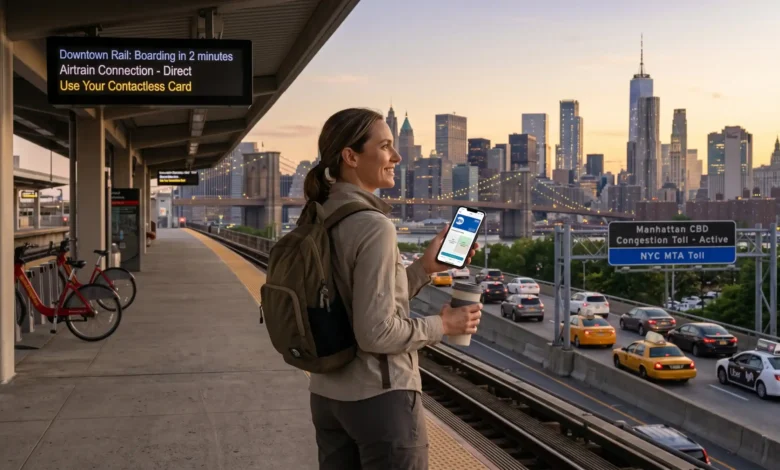
Real Example: Driving a rental car into Manhattan below 60th Street now incurs a Central Business District toll introduced in 2025/2026. This makes the MTA subway the only mathematically sound budget option for navigating New York City.
Master the Airport Rail Link
Premium urban transport options, including private airport transfers, carry a massive markup. Tourists save a significant amount of money by utilizing direct-to-city public rail links from major airports instead of waiting in the taxi line.
Mini Case Study (The Airport Transfer Error): A solo traveler arriving at SFO takes a private rideshare to downtown San Francisco during rush hour, paying $75 or more due to surge pricing. A budget-savvy traveler takes the direct BART rail link from the terminal to downtown for around $10, saving enough to cover an entire day’s food budget.
Pro Tip: Before you fly, identify the direct rail link for your destination airport, such as the Blue Line in Chicago, BART in San Francisco, or the AirTrain and subway combination in New York City.
Navigating Local Transit and Micro-Mobility
Specific public transit fare rates fluctuate across local networks like the NYC MTA, SF BART, and Chicago CTA. You must verify current pricing and fare rules on official city transit portals prior to travel.
For trips that are slightly too far to walk but too short for a long subway ride, avoid the temptation to call an Uber or Lyft. Municipal bike-share networks, such as Capital Bikeshare in Washington D.C., offer short-term tourist passes. These passes drastically undercut the cost of private rideshares for micro-transit.
Common Mistake: Paying per ride on public transit when a daily or weekly unlimited pass is available. Always check if the city offers “fare capping,” which automatically stops charging your card once you hit a daily maximum limit.
Intercity Travel: The Amtrak Rule
Moving between expensive cities on the East Coast is highly efficient by train, but only if you plan ahead. Advanced booking on US passenger rail networks is strictly required to secure budget fares.
Pro Tip: When traveling the Northeast Corridor between Boston, New York City, and Washington D.C., book Amtrak regional trains at least four to six weeks in advance. This secures the lowest pricing tiers before the algorithm dynamically scales prices up closer to the departure date.
Calculating Attraction Pass ROI: Don’t Buy Blindly
Bundled attraction tickets, such as CityPASS and Go City, provide mathematically verified savings for tourists compared to buying separate, high-tier attraction tickets in major US cities. However, these passes only work if your travel pace matches the ticket structure. Buying a pass without planning your daily itinerary is a quick way to lose money.
Mini Case Study (The Attraction Pass Trap): A couple visits Chicago and buys a 3-day Go City pass for $160 each. Because they only visit one premier attraction per day (average standalone cost $35) and spend the rest of their time walking free parks, they lose $55 each. High-tier day passes require a pace of at least three paid attractions per day to yield a positive return on investment.
Pro Tip: Calculate your daily attraction capacity before purchasing any pass. If you travel slowly and prefer spending four hours at a single museum, buying individual tickets is cheaper.
Pass ROI Comparison Matrix
| Ticket Type | Best For | How It Works | ROI Requirement |
| Day-Based (e.g., Go City) | Fast-paced, high-energy tourists | Unlimited entry to listed sites for a set number of days. | Must visit 3+ high-ticket sites per day. |
| Item-Based (e.g., CityPASS) | Moderate-paced travelers | Entry to a specific number of preset attractions (e.g., 5 total) over a week. | Must visit all included sites to maximize the discount. |
| A La Carte (Individual) | Slow travelers, budget purists | Buying direct from the museum/attraction. | Best when visiting 1 paid site per day or utilizing free days. |
Practical Tooling: Attraction Pass ROI Check
Use this quick decision tree before buying:
Are you visiting 3 or more high-ticket museums or observation decks per day?
- Yes: Buy a Day-Based Pass.
- No: Go to question 2.
Are you visiting 4 or 5 specific major sites over a whole week?
- Yes: Buy an Item-Based Pass.
- No: Buy individual tickets.
📌 Mid-Article Summary: The Local Logistics Path vs. The Tourist Path
- The Tourist Path: Rents a car at the airport, pays $50/night for hotel parking, eats three meals a day at downtown restaurants, and buys a day-pass they barely use.
- The Local Logistics Path: Takes the airport rail link, uses municipal bike-shares for short trips, buys grocery snacks to replace expensive breakfasts, and calculates exact pass ROI before spending a dime.
Finding Guaranteed Free Attractions & Museums
Not all expensive cities treat museum funding the same way. Washington, D.C. offers major budget relief for tourists because all federal Smithsonian Institution museums maintain free admission year-round. This includes massive sites like the National Museum of Natural History and the National Zoo, saving a family of four hundreds of dollars.
In cities where museums charge $25 to $30 for entry, you have to get strategic.
Many top-tier museums in expensive cities offer “pay-what-you-wish” hours or specific free days sponsored by local corporations.
Top 5 Strategies for Securing Free Entry:
- Check the official museum website for dedicated free evenings (often the first Thursday or Friday of the month).
- Look for “pay-what-you-wish” windows, which are sometimes restricted to local state residents but occasionally open to all visitors.
- Search for free outdoor sculpture parks, botanical garden conservatories, and public architecture tours.
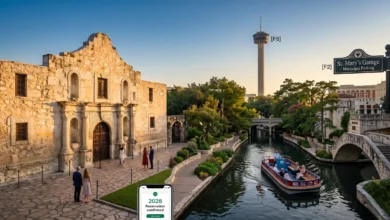
- Utilize federal sites; many National Park Service historical sites in urban centers are completely free.
- Verify if advance online reservations are required for free days, as capacity limits often cause these tickets to “sell out” weeks in advance.
Pro Tip: Do not assume you can just walk in on a free day. Always check official museum admission pages to confirm if you need to reserve a timed-entry ticket online.
Accommodation Logistics: The 4-Stop Radius
Staying directly next to a major convention center or in the immediate downtown core guarantees you will pay the highest possible nightly rate. You can drop your accommodation costs significantly by staying just outside the center.
Look for hotels that are three to four subway stops away from the main tourist hubs. As long as the hotel is within a five-minute walk of a reliable rail station, the minor commute is worth the massive reduction in your lodging budget.
Practical Tooling: The Urban Transit Expense Checklist
Before booking your hotel and flight, check these exact details for your destination city:
- [ ] Is there a direct public train from the airport to the city center?
- [ ] What is the daily hotel parking fee? (If it is over $30, do not rent a car).
- [ ] Does the local public transit system offer automatic daily/weekly fare capping?
- [ ] Is there a municipal bike-share network available near my hotel?
End Summary & Next Steps
Surviving an expensive US city vacation in 2026 comes down to transit math and logistical planning. By escaping the rental car trap, avoiding private airport transfers, shifting your dining habits, and strictly calculating your attraction pass ROI, you can protect your budget from urban inflation.
Your Next 3 Steps:
- Verify the local airport public transit links for your specific destination.
- Run the Pass ROI Decision Tree against your planned daily itinerary.
- Book your intercity Amtrak tickets or reserve your free museum entry slots online.
FAQs
Are CityPASS and Go City passes actually worth it?
They are mathematically proven to save money, but only if you use them efficiently. Day-based passes require you to visit three or more major attractions daily. If you travel slowly, individual tickets are cheaper.
What is the cheapest way to get from JFK, ORD, or SFO to downtown?
The cheapest way is the direct public rail link. Look for the AirTrain to the subway in NYC (JFK), the Blue Line in Chicago (ORD), and BART in San Francisco (SFO).
Do I need a rental car to visit New York or Washington D.C.?
No. Renting a car in these cities is a financial mistake due to severe overnight parking fees and high urban tolls. Use multimodal public transit instead.
Why is food so expensive in major US cities right now?
Rising municipal minimum wages—such as base pay exceeding $17 per hour in cities like Chicago—have increased operating costs for restaurants, pushing menu prices higher.
Are the Smithsonian museums really free for everyone?
Yes. The federal Smithsonian Institution museums in Washington D.C. offer permanent free admission to all visitors year-round.
How do tourists pay for public transit in US cities?
Most major US transit systems now accept contactless payments (tap-to-pay credit cards or Apple/Google Pay) directly at the turnstile. Always check the local transit authority portal to confirm.
What is the best month for budget travel to the USA?
Shoulder seasons (late January through March, and late September through early November) generally offer lower hotel rates and fewer crowds compared to the summer peak.
References
- Urban Studies Journal, 2026
- George Washington University / Smithsonian Guidelines, 2026
- Coastal Carolina University, 2022
- GWU Himmelfarb Library, 2026
- National Employment Law Project, 2025
- Victoria Transport Policy Institute, 2026
- Transportation Research Part C, 2021